
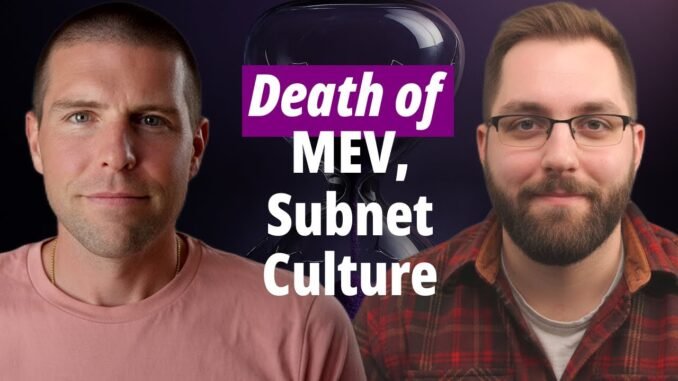
The latest episode of Carrot and the Stick tackled two issues that matter more than anything else in Bittensor right now: the elimination of MEV attacks and how the network should govern subnets going forward.
Watch the episode here:
First, the big win. MEV on Bittensor is effectively dead. After nearly 11 months of sandwich attacks draining value from traders, the OpenTensor Foundation pushed a fix by disabling transaction replacement at the node level. The result was immediate. MEV transactions started failing, and the exploit vanished almost overnight. It is one of the clearest examples so far that Bittensor can respond quickly when core economic integrity is threatened.
The timing matters. Shortly after the fix, Bittensor founder Jake announced plans to stake roughly 20,000 TAO into subnets over the coming months. That is a strong signal of confidence in a now safer trading and staking environment. Larger players can participate again without worrying about being systematically extracted.
From there, the conversation moved into more uncomfortable territory: subnet quality, governance, and mission alignment.
The hosts debated whether Bittensor should remain strictly focused on AI or allow broader use cases to coexist. One side emphasized that AI is Bittensor’s core mission, and that focus is what allows subnets to collaborate, compound value, and compete with centralized AI labs. The other acknowledged that while AI dominance makes sense today, Bittensor’s deeper idea of programmable mining could eventually support valuable non-AI intelligence markets as well.
Where both agreed was on this point: permissionless does not mean consequence-free.
Subnets that manipulate emissions, block fair participation, or extract value without delivering anything meaningful cannot simply hide behind “code is law.” Markets alone do not always correct these behaviors, especially when subnet owners control emissions, validator incentives, and liquidity flows. In cases of clear manipulation or abuse, governance intervention is not only justified but necessary.
Illegal content and outright exploitation were universally seen as red lines. The harder question is what to do with subnets that are technically valid but strategically harmful or misaligned with Bittensor’s goals. That debate is far from settled.
The episode made one thing clear. Bittensor is entering a more mature phase. MEV is gone. Capital can move more freely. But with that comes tougher decisions about standards, incentives, and what kind of network Bittensor actually wants to become.
The technology is evolving fast. Now the social layer has to keep up.
Enjoyed this article? Join our newsletter
Get the latest Bittensor & TAO ecosystem news straight to your inbox.
We respect your privacy. Unsubscribe anytime.



Be the first to comment