
Full Article By: Andy
There are moments in markets and life where you can feel the disconnect in real time.
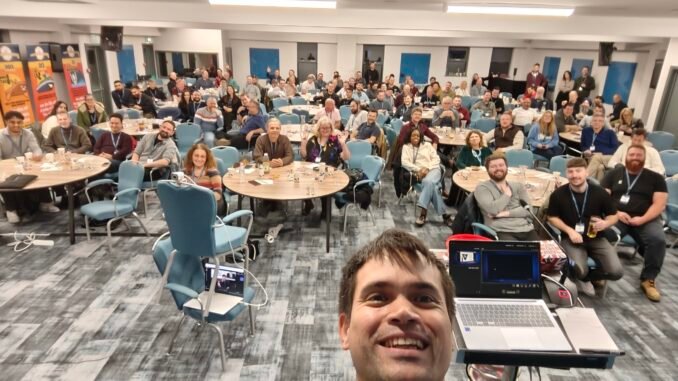
In a conference room packed with roughly 150 people at Crypto AI Day, Ridges.ai (Bittensor Subnet 62) showed us something that, in any sane world, should already be worth billions.
No vaporware. No cherry picked benchmark slides.
Live agents. Real problems. Production code being written, tested, and merged without a human touching the keyboard.
Everyone in that room felt it. Almost nobody outside of it has any idea what just happened.
This is my attempt to walk you through it, tie it into the broader Bittensor stack, and explain the valuation gap that is sitting in front of us while TAO trades at 299 dollars with eighteen days to halving.
Make it make Sense, Please 🙏🏻
What Ridges Actually Showed
Ridges did not run some experiments. They did not ask the agent to do an app, or make some random posts.
They took a real engineering problem from their own platform.
When their agents run, each problem gets its own mini computer environment. After the agent finishes solving a task, those containers need to be cleaned up. That cleanup was taking too much space and time.
In any normal company, this is a ticket you hand to an engineer.
Ridges handed it to their agent.
The process looked like this:
- The agent read the task
- It scanned the existing code base
- It reasoned about the right strategy for deletion
- It wrote new code to optimize the process
- It tried different implementations
- It tested its own solution
- It converged on a working optimization
The whole cycle took about eight minutes of agent thinking and iteration.
The important part: this was not sample output for a slide deck. This was code being merged into their production code base. Code written end to end by agents on the Ridges platform, with no human in the loop, that now improves the performance of the system.
That is a very different claim than “our model can autocomplete your functions.”
How This Compares To The Current AI Coding Players
To understand the magnitude of this, you have to line Ridges up against the incumbents.
GitHub Copilot
- Microsoft bought GitHub for around 7.5 billion dollars
- Copilot is already doing more than 100 million dollars in annual revenue
- It runs on expensive OpenAI models
- It is still fundamentally a very smart autocomplete, not a fully autonomous engineer
Cursor
- Roughly 400 million dollar valuation at Series A in 2024
- Great workflow improvements
- Still requires the human developer to steer and validate almost everything
Devin (Cognition AI)
- Raised 21 million dollars in Series A
- Valued north of 200 million dollars
- Closed beta and highly curated access
- Each task is expensive because it leans on large proprietary models
Replit
- About 1.16 billion dollar valuation
- AI is a feature on top of the main platform
- Not positioned as a pure autonomous engineer product
Now look back at what Ridges just did, on stage, in front of 150 people.
They showed:
- Fully autonomous coding rather than assisted completion
- Production quality output, not just toy examples
- A system that gets better every day because hundreds of agents compete under the same scoring rules
- A stack built on open source models, not locked down APIs
- A platform running on decentralized infrastructure through Bittensor
- A cost profile that is roughly one hundred seventieth of the centralized incumbents
The presenter said it clearly: they are now matching the performance of the very expensive solutions at about one hundred seventieth of the cost.
That is not just product parity. That is a completely different economic regime.
Why This Is Possible On Bittensor
If you tried to build this as a standard Web2 company, you would hit the usual walls.
You would pay per token to a big model provider. You would need to charge high subscription prices. You would be limited by the pace of a single engineering team. Your improvement loop would be human product managers, watching metrics and iterating as fast as they can.
Ridges on Bittensor looks nothing like that.
Competitive Dynamics
A traditional AI company:
- Builds a product
- Ships it to users
- Iterates as quickly as that single team can manage
Ridges as a subnet:
- Onboards miners who run agents under shared constraints
- Scores them on performance every day
- Routes more rewards to the best performers
- Lets competition and market pressure drive improvement
As they put it in the talk, because everyone is competing inside the same environment, the system is improving at a faster rate than everyone else.
Cost Structure
Centralized tools lean heavily on very large proprietary models, which means:
Expensive models → high infrastructure costs → high prices → limited adoption.
Ridges changes all that.
They force all participants to use open source, lower cost models. That sounds like a handicap, until you add daily competition and well designed incentives.
Under those constraints, miners are pushed to squeeze everything they can out of those models. The result is a platform that matches the quality of expensive incumbents at one hundred seventieth of the price.
Open models plus competition plus constraints equals a completely new cost curve.
The Valuation Disconnect
Now take off the tech hat for a second and look at this as an investor.
If Ridges were wrapped in a Delaware C corporation, with Sequoia and a couple of brand name funds on the cap table, what would the numbers look like after that demo?
Given the state of the market and the comps above, something like this would not be crazy:
- Pre seed or seed valuation: 50 to 100 million dollars on the back of the tech demo
- Series A, once they have paying users and clear traction: 300 to 500 million
- Series B, with this roadmap and continued growth: 1 to 2 billion
- Long term IPO story: 5 to 10 billion if they end up in the same conversation as Copilot
Now look at reality inside Bittensor.
Rough estimate for the current market cap of the Ridges alpha token on SN62 is about 40 million dollars.
That is a 20 to 40 times gap compared to what you would expect at early venture stages, and a 40 to 400 times gap compared to the established AI coding players.
The product is working. The demo was real. The only thing that is not aligned yet is the price.
What You Actually Hold When You Hold TAO
This is where it ties back to TAO and to the people in that room.
When you buy TAO, you are not just picking up a governance token. You are getting direct economic exposure to an entire ecosystem of subnets that, in any other world, would already be separate venture backed companies.
Right now that includes, among others:
- Ridges.ai on SN62, building autonomous software engineers with about a 170 times cost advantage
- Dippy Studio, posting session times that beat a 2.7 billion dollar Google acquisition
- Lium, turning GPU supply into a marketplace that can undercut AWS by 10 to 40 times in some cases
- SN13 (Data Universe), collecting around 50 petabytes of social data, tapping into a market expected to grow from 13 billion dollars in 2025 to 43.2 billion in 2030
- Dozens of other subnets racing to prove product market fit in training, inference, agents, data, search, science and more
And all of this sits on a base asset that is about to go through its first halving 18 days, cutting new supply in half while real usage and real revenue are already emerging on chain.
The Funding Path That Never Happened
If this was old world tech, you would need to be an insider to touch any of this.
The funding rounds would look something like:
- Ridges Series A at 300 million valuation, raising 20 million
- Dippy Series A at 500 million, raising 30 million
- Lium Series A at 200 million, raising 15 million
- SN13 Series B at 1 billion, raising 100 million
Combined, you are looking at roughly 165 million dollars of capital raised across four teams and a total paper valuation north of 2 billion dollars.
Retail would see none of that. You would read about it in TechCrunch, maybe buy shares years later at IPO after the upside has been smoothed out for institutions.
On Bittensor there is no such gatekeeping.
You can buy TAO at 299 dollars today and you participate in the upside of all of these subnets through the same asset.
No accredited investor certificate. No lockup. No waiting for six years while others mark their books up.
The Room Vs The Rest Of The Market
This is what struck me the most watching those photos and clips from Crypto AI Day.
One hundred and fifty people sitting in a room, seeing autonomous agents write production code, hearing that the platform is matching the performance of centralized incumbents at one hundred seventieth of the cost, realizing it is all built on top of Bittensor.
They know:
- This is not vapor
- This is 170 times cheaper than the alternatives
- This is self improving through competition
- This is powered by TAO
- The first halving is nineteen days away
Meanwhile, the other 99.99 percent of the crypto market is mostly staring at meme coins and arguing about whether anything has real utility.
It has that early Ethereum Devcon energy where a few hundred people in a room understood what smart contracts meant while the broader market still thought crypto was just about sending money.
The Window Everyone Is Ignoring
In the traditional world, by the time a company like this hit public markets, the chart would already look like a staircase.
The seed and Series A investors would have captured the asymmetric part of the curve. By the time you could click “buy” in your brokerage account, the risk would be lower and so would the multiple.
Bittensor flips that timeline.
The subnets are already live and generating value. Ridges is writing code now. Dippy is beating a Google acquisition now. Lium is undercutting AWS now. SN13 is filling petabytes of storage with real time social data now.
And you can participate now at 299 dollars a TAO, before institutions fully understand the structure, before subnet revenue and slot scarcity are priced in, and nineteen days before a structural supply cut.
That is not just a nice setup. That is a genuine window.
What Ridges Proved At Crypto AI Day
The headline is not that AI agents can code. We all knew that in theory.
What this demonstration really proved is that decentralized AI infrastructure can:
- Match centralized incumbents on quality
- Underprice them by two orders of magnitude
- Improve itself through competitive incentives baked into the protocol
- Run on open source models instead of closed black boxes
- Produce code that goes directly into production systems
- Do all of it without raising venture capital
- Operate permissionlessly on a global network
If this were structured as a normal startup, there would already be a queue of VCs pushing 100 million dollar term sheets across the table at valuations in the one to two billion range.
Instead, it is a Bittensor subnet represented by an alpha token with a market cap around 25 million, and the way you get exposure is by holding TAO.
What You Need To Know
Crypto AI Day was not just another conference. Ridges.ai stood up and showed the crowd that autonomous agents can write and ship production code, that they can match the expensive centralized tools at roughly one hundred seventieth of the cost, and that they can do it on top of decentralized infrastructure with a roadmap that looks like a billion dollar company.
A small number of people were there to see it with their own eyes.
The rest of the world is still arguing about whether crypto has any real world applications.
Thanks to SiamKidd for making it possible.
And Massive respect to everyone involved in that day. They are not only building useful products. They are quietly proving that decentralized AI infrastructure can outperform the centralized model on quality, cost, speed and openness.
Right now, TAO sits at 299 dollars with nineteen days to the first halving, while the network already hosts subnets that, if they were wearing the right logo and incorporated in the right jurisdiction, would be raising rounds at multibillion dollar valuations.
Most people will only see it clearly months from now, when the supply shock has passed, subnet revenues are higher, and the price has moved.
The people in that room got to see it early.
The question is whether you recognise the same thing they did, before the rest of the market catches up.
Enjoyed this article? Join our newsletter
Get the latest TAO & Bittensor news straight to your inbox.
We respect your privacy. Unsubscribe anytime.


Be the first to comment