

We are joined by Chris Zacharia, founder of bitstarter.ai and founding partner at Macrocosmos.
Outsider 1: Chris, the last time we chatted, Bitstarter was just starting to take shape. Two months later (sounds like 1 year), nearly 1,500 TAO have been deployed by more than 200 people across three projects launched within the Bittensor ecosystem.
Looking back, what has been the biggest real challenge so far? Do you expect this to remain the main challenge in 2026, or do you see a different and more complex obstacle emerging ahead? If so, which one and why?
Chris 1: Vision into reality, idea into innovation, zero to one: they say it’s the hardest part. But honestly, the first few weeks of Bitstarter were like a dream. Every time we seemed to come up against an obstacle, a solution appeared. And by the time of our first livestream, it was like sprinting home to the finish line. I was so determined to prove that the idea could fly, I hadn’t fully thought through what would happen once it actually took off.
Everything happened as I’d imagined, more or less – except way, way more things happened than I could’ve anticipated. Every launch is different, every team carries its own needs, and the unexpected has many more dimensions than it first appears. Aligning advisors, pledgers, partners and the team itself (and doing it live on air) is, quite honestly, very ambitious. The hardest weeks were those following the AlphaCore launch, in the build-up to Christmas: there were a thousand things to do, and we were still learning how to do them.
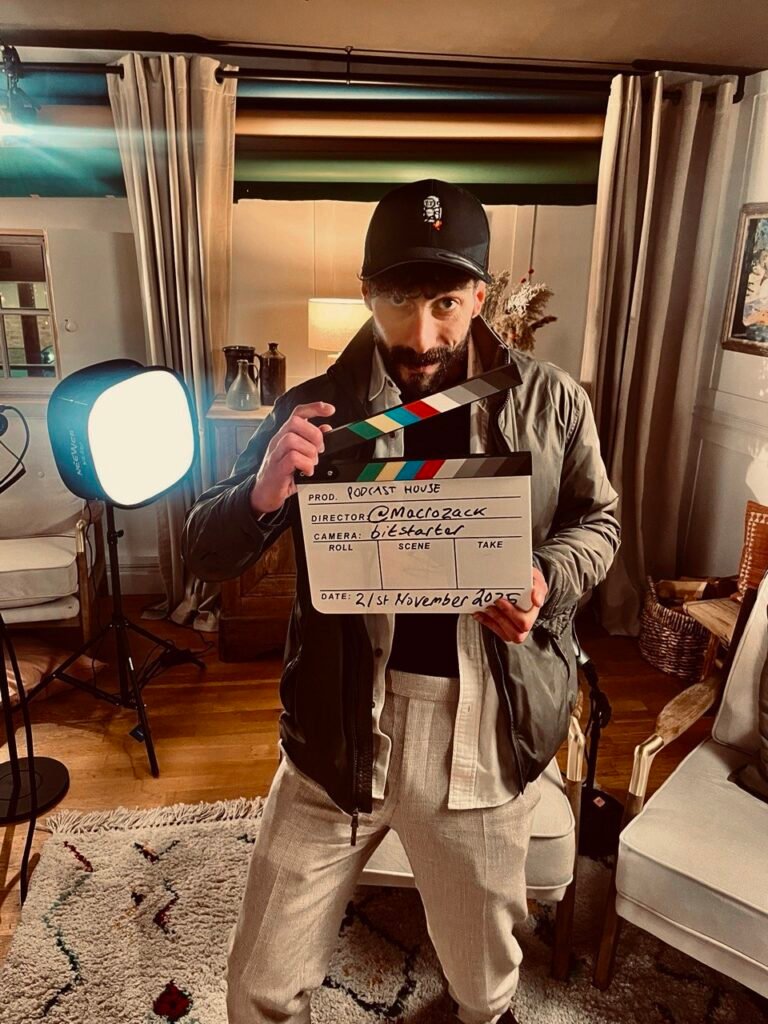
But we’ve levelled up every time, and our livestream with Djinn was our best yet. Introducing accmplished serial founders to the protocol, presenting a novel idea backed by Bittensor OGs, and raising 600T in under an hour… live from Davos. Had you told me, when we last spoke back in October, I wouldn’t have imagined it. But I did dream it. And because there’s so much talent on the protocol, the dream came true.
Right now, we’re exploring new and better ways to raise capital for subnets while giving Alpha holders more value. Time to take it to the next level.
Outsider 2: How many projects do you expect to launch across 2026? We already have enough slots for your plans in Bittensor? (I think every day we need 256 ASAP.)
Chris 2: Back before our first livestream, I said we could launch a team a week. And we can. Even with the challenge of brokering for subnet slots, we have enough time, talent, and teams to do it.
But that’s how a launchpad behaves: pumping teams onto protocols, emphasising speed above all else.
We want to do more than that. We want to incubate teams, accelerate their development, and build Bittensor into its best possible state. Crowdfunding a team a week would mean less time pre- and post-launch. Every team is different, and rushing them out risks undermining their chances of success.
One a month means we can properly assess, upskill, and nurture teams for mainnet. But it also means we’ll be partnering more deeply with each team.
And as for the cap… I’d love to see it raised, but only if the quality could be raised, too. I want the next 128 teams to be much, much better than the first generation. Quality over quantity – but ultimately, we need both.
Outsider 3: Bitstarter has been essential in this role of bringing strong teams into the ecosystem.
At the same time, I understand that you won’t be just a company that brings good teams into subnet slots, but rather a full 360 solution within the ecosystem. With that in mind, what areas have the most demand and room to grow in our ecosystem for people who are neither subnet owners nor just holders?
For example, I clearly see demand for marketing professionals. Do you agree? Where else are the opportunities for builders and specialized professionals? Where does our ecosystem still need the most support?
Chris 3: Before, Bittensor was mostly devs speaking to other devs. Now, as it evolves into a sub-economy of its own, the need for a broader range of skills and services is growing.
Marketing and sales are crucial. But we need more than that: we need integration: building non-technical aspects into the subnet’s roadmap as early as possible.
If you wait until further down the line, you might discover that the output your subnet has been driving towards doesn’t sell. Maybe it doesn’t fit with procurement models, maybe enterprises can’t buy it unless it meets some standard for assurance. Either way, you need to know this as early as possible, or else you risk wasting months or even years of development.
Bittensor doesn’t think like that – but corporations do, and if we want to breakthrough, we need our teams to be aware of these things right from the start.
But on the whole, this ecosystem has already matured hugely. dTAO was only a year ago. All the gaps you see, the unmet demand, the untapped potential? They’re huge opportunities, and those who are willing to fulfil them can lead the whole protocol forward.
Outsider: I hadn’t looked at it from this perspective before, and it makes total sense. I strongly agree with it.
Thanks for lending us your lens. We did it, Chris. Hope to see you back here in December so we can review all of this. Long live Bitstarter.
Note: Outside of building Bitstarter, Zach stays involved in some other things too. Here’s a photo proof that he still got at least one major hip-hop album inside of him:

For those of you who made it to the end of the interview, support OUTsider Insights, share it on X, and tag me @TaoOutsider, Chris @macrozack, and Tao Daily @taodaily.
Enjoyed this article? Join our newsletter
Get the latest Bittensor & TAO ecosystem news straight to your inbox.
We respect your privacy. Unsubscribe anytime.


Be the first to comment