

Loosh AI, building on Bittensor’s Subnet 78, has released the public beta of its Cognition Engine, offering an early look at a decentralized system designed to make machine reasoning, memory, and behavioral constraints directly observable.
Unlike consumer facing AI interfaces, the Loosh Cognition Engine is built as infrastructure. It exposes the internal processes that govern how agentic systems reason, retain information, and act under defined constraints.
Powered by Bittensor’s incentive framework and accelerated through Yuma Group, Subnet 78 is one of the first Bittensor subnets explicitly focused on cognition and machine consciousness primitives.
A Cognition Layer, Not a Chat Interface
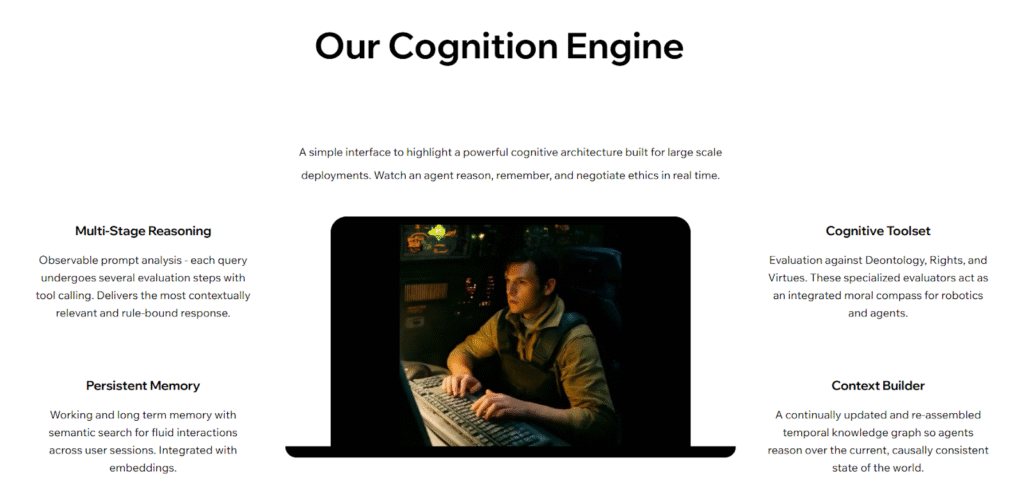
The Cognition Engine is not positioned as a chatbot or general purpose assistant. Instead, it functions as an inspectable reasoning stack intended for robotics and autonomous agent systems.
Tasks are executed through multi-stage reasoning pipelines rather than single prompt responses. Users can observe how problems are decomposed, how memory is accessed, and how decisions evolve across execution steps.
Core services exposed in the beta include:
a. Working memory and persistent long-term memory,
b. Embedding and retrieval infrastructure,
c. Multi-stage reasoning with tool calling,
d. Dynamic task prioritization and dispatch, and
e. Event-driven messaging that surfaces internal system state.
This architecture emphasizes transparency and composability over abstraction.
Ethics Implemented as System Constraints
A defining feature of the Loosh Cognition Engine is its explicit ethics layer.
Instead of relying on implicit safeguards, Loosh integrates multiple ethical evaluators that actively constrain agent behavior during execution. These evaluators operate as functional components within the system rather than policy statements.
The beta allows users to test how different ethical frameworks influence outcomes, including:
a. Rights-Based Evaluators who judge actions by whether they respect or violate explicitly defined rights, focusing on protections owed to individuals regardless of outcomes,
b. Deontological Evaluators who assess actions according to adherence to formal duties or rules, asking whether the action itself is permissible independent of its consequences, and
c. Virtue-Based Evaluators who evaluate actions by the character they express, considering whether the behavior reflects the traits of a virtuous agent and leads toward good outcomes.
By introducing conflicting constraints and edge cases, participants can directly observe how ethical reasoning alters decision paths. This approach is particularly relevant for robotics and autonomous systems where alignment and safety must be enforceable at the system level.
Integration With the Bittensor Network
Subnet 78 is designed to operate natively within the Bittensor ecosystem. Through TAO’s decentralized architecture:
a. Miners would run open source models,
b. The API would be open source, and
c. Validator and miner codebases would be prepared for inference workloads.
The validator implementation is currently undergoing final review, with validators expected to go live ahead of miners. Following audit completion, the repositories will be made public.
This phase represents the initial deployment of Loosh inference workloads through Bittensor’s decentralized incentive structure.
Intended Participants
The Cognition Engine beta is aimed at technical and ecosystem aligned users rather than general audiences. It is intended for:
a. Bittensor miners, validators, and stakers,
b. Early stage AI and robotics builders,
c. Researchers exploring observable reasoning systems, and
d. Developers testing constraint-driven agent architectures.
While access is invite based, reinforcing the beta’s role as a controlled testing environment, registration is available through Loosh’s official portal.
This phase is to allow participants to treat the system as an experimental environment with the aim to surface edge cases, challenge assumptions, and provide feedback that informs future iterations.
Broader Implications
The launch from Loosh (Subnet 78) reflects a broader evolution within the Bittensor ecosystem. Subnets are increasingly moving beyond isolated model hosting toward full-stack intelligence systems with explicit economic incentives, governance, and accountability.
By exposing cognition as infrastructure rather than abstraction, Loosh offers a practical demonstration of how decentralized agent systems may operate in production environments.
This beta does not represent a finished product. It marks an early but concrete step toward decentralized, inspectable machine cognition built on Bittensor and powered by $TAO.
Enjoyed this article? Join our newsletter
Get the latest Bittensor & TAO ecosystem news straight to your inbox.
We respect your privacy. Unsubscribe anytime.



Be the first to comment