
Cloud storage has become so invisible that most people rarely question it. You upload a file, it syncs across devices, you share a link, and it just works. But beneath that convenience sits a fragile assumption: That someone else is holding your data, and you trust them to do it right.
For years, that tradeoff made sense. Centralized platforms offered speed, reliability, and ease of use. In return, users gave up control, visibility, and in many cases, ownership.
Now, the landscape is changing.
Data is no longer just personal, it is economic, and it powers AI systems, fuels applications, and underpins entire digital economies. Suddenly, the old model starts to feel insufficient.
That’s because when data becomes critical infrastructure, storage cannot remain a ‘black box.’ It needs to be transparent, verifiable, and resistant to failure and control.
This is the context in which Hippius emerges, but as a different way to think about storage entirely.
What Is Hippius (Subnet 75)?
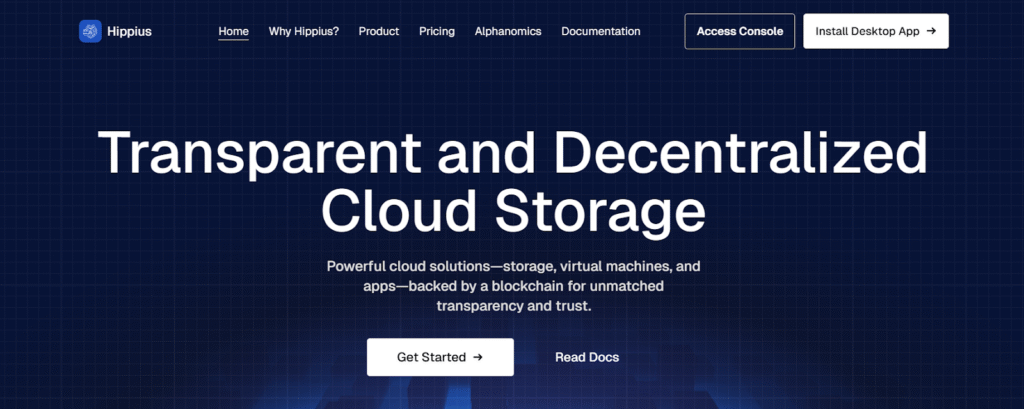
Hippius is a decentralized cloud storage network built as Subnet 75 within the Bittensor ecosystem. At a surface level, it offers familiar services (cloud storage service) but its underlying design is fundamentally different.
Instead of storing data in centralized data centers, Hippius distributes it across a network of independent nodes. These nodes, known as miners, provide storage capacity and are rewarded for doing so.
Every action in the system is transparently recorded on-chain, every participant is economically incentivized, and every resource is measurable.
This transforms storage into a market-driven commodity, where supply, demand, and performance determine outcomes.
How Hippius Works: Built on Coordination and Incentives
Hippius operates through a combination of blockchain coordination and off-chain storage infrastructure. Essentially, the system relies on three key actors:
1. Storage miners who provide actual storage capacity. They:
a. Store user data,
b. Maintain availability, and
c. Replicate files across the network.
Miners are continuously evaluated based on uptime, reliability, and responsiveness.
2. Validators coordinate the system. Their main job description is to:
a. Assign storage tasks to miners,
b. Monitor performance, and
c. Report metrics back to Bittensor (for rewards).
Their role ensures that storage is not just available, but dependable.
3. Hippius (The Marketplace Layer) basically connects users to the network. When a user purchases storage:
a. Credits are issued on-chain,
b. Requests are routed to validators,
c. Validators assign tasks to miners, and
d. Data is stored and replicated.
Everything is tracked transparently.
The Dual-Storage Architecture: Designed for Real-World Needs
Hippius supports two storage models, each serving different use cases.
a. IPFS Storage
This system uses content-addressed storage through which files are identified by cryptographic hashes, data is replicated across multiple nodes, and content remains permanent as long as it is incentivized
This option is ideal for public datasets, immutable records, and long-term archival storage.
b. S3-Compatible Storage
This mirrors traditional cloud storage. With this storage option, files are stored in buckets and accessed via keys, data can be updated, deleted, or managed dynamically, and APIs are compatible with existing developer tools.
This is a nice option for applications, private data, and enterprise workflows
How to Use Hippius for File Storage
Despite its complexity, the user experience remains straightforward.
a. Access the Hippius dashboard, and sign-up,
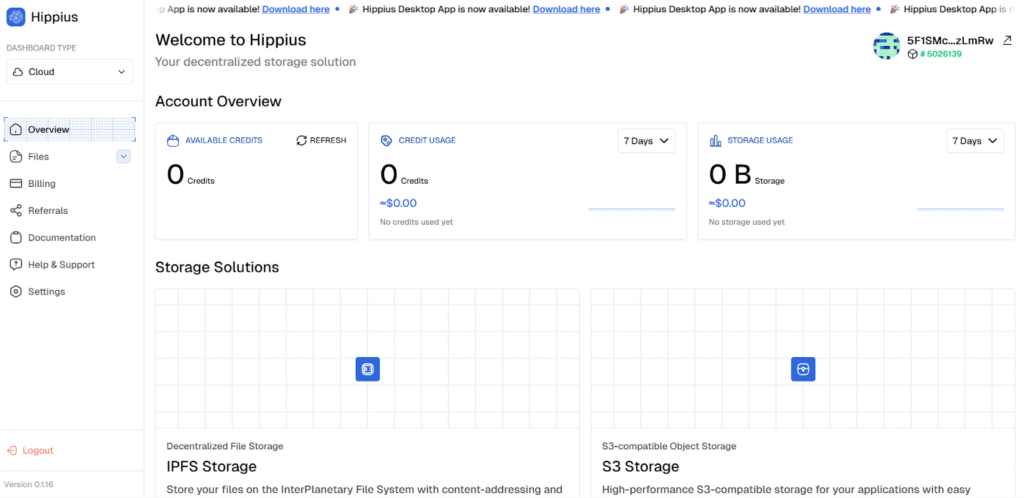
b. Choose storage type: IPFS or S3,
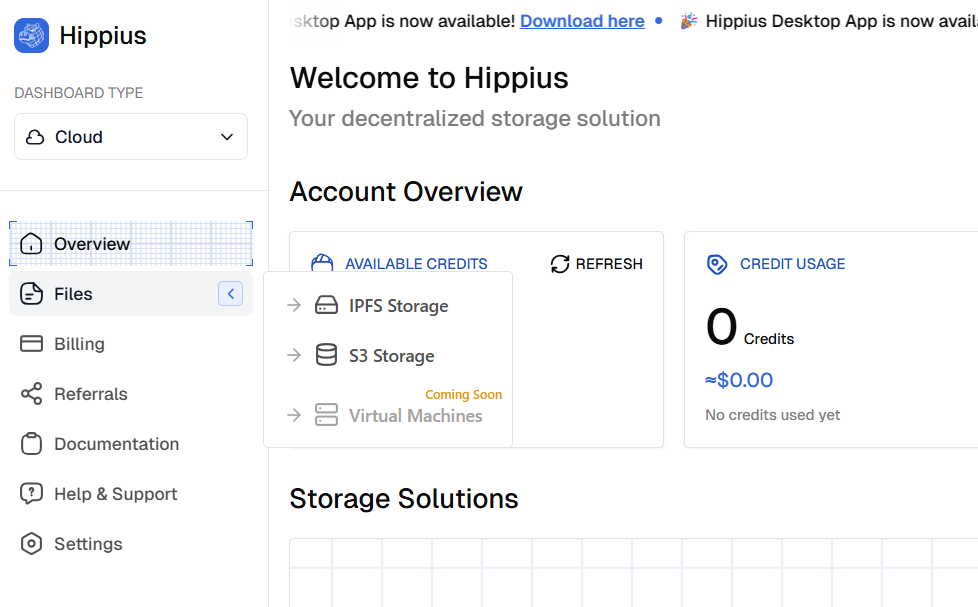
c. Pay using fiat or crypto, and
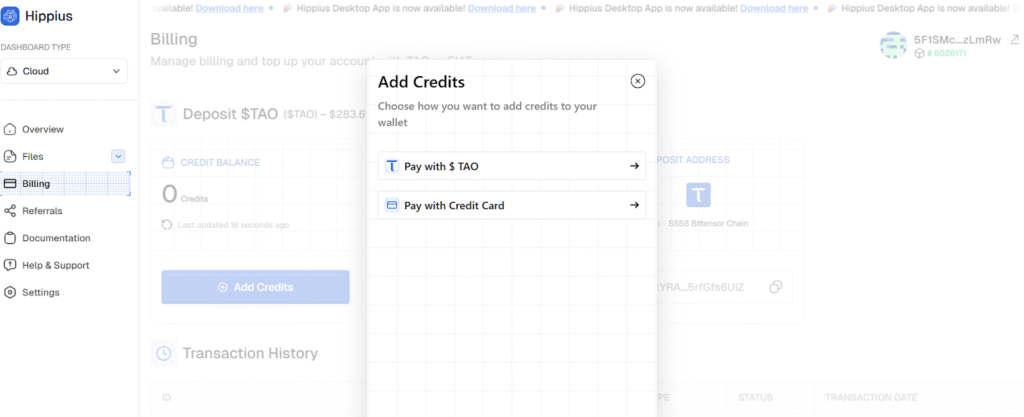
d. Receive storage credits on-chain to access the storage facility.
After uploading the data,
a. Files are encrypted before distribution,
b. Data is split and replicated across multiple nodes, and
c. Storage is registered on-chain.
To access stored data, users would be required to:
a. Retrieve files via IPFS hash or S3 endpoint,
b. These requests would be routed to optimal nodes by validators, and
C. Data is reconstructed and delivered.
This ensures that there is no single point of failure, there is high redundancy, strong privacy guarantees, and full transparency into usage and cost
Hippius vs. Dropbox
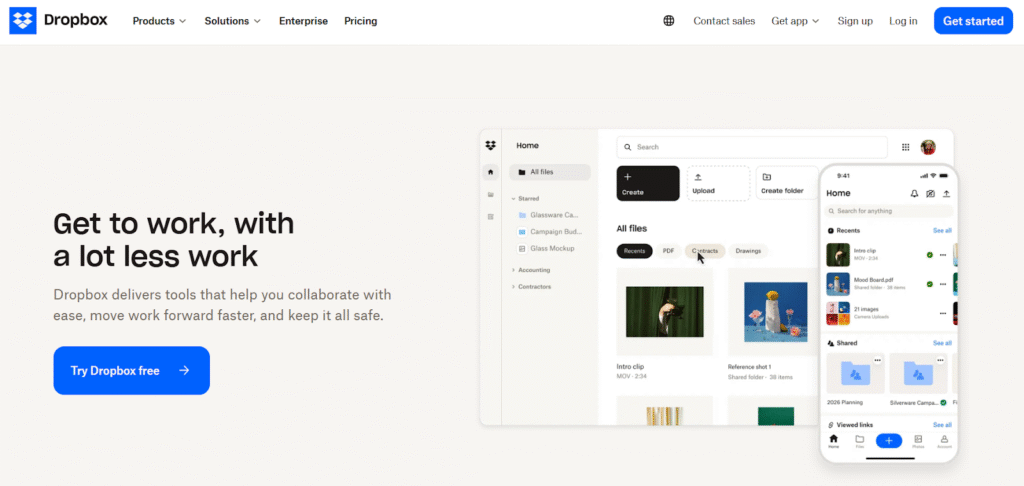
Dropbox is a centralized cloud storage platform that stores user data in proprietary data centers and provides access through account-based systems.
Dropbox, founded in 2007, represents the default mental model for cloud storage, it is simple, centralized, and widely understood.
Hippius reimagines the ‘Dropbox’ model entirely:
1. Infrastructure Model
a. Hippius manages a distributed network of independent nodes who provides storage capacity and are, thus, rewarded for it,
b. Dropbox manages huge centralized servers in cities across the world.
2. Data Ownership
a. Ownership of data on Hippius is controlled through cryptographic keys, generated on users’ personal dash,
b. Dropbox data is managed through user accounts.
3. Privacy and Trust
a. In Hippius, trust is minimized with encryption and decentralization,
b. Dropbox is secure, but requires trust in the goodwill of the provider (not the system).
4. Pricing Mechanism
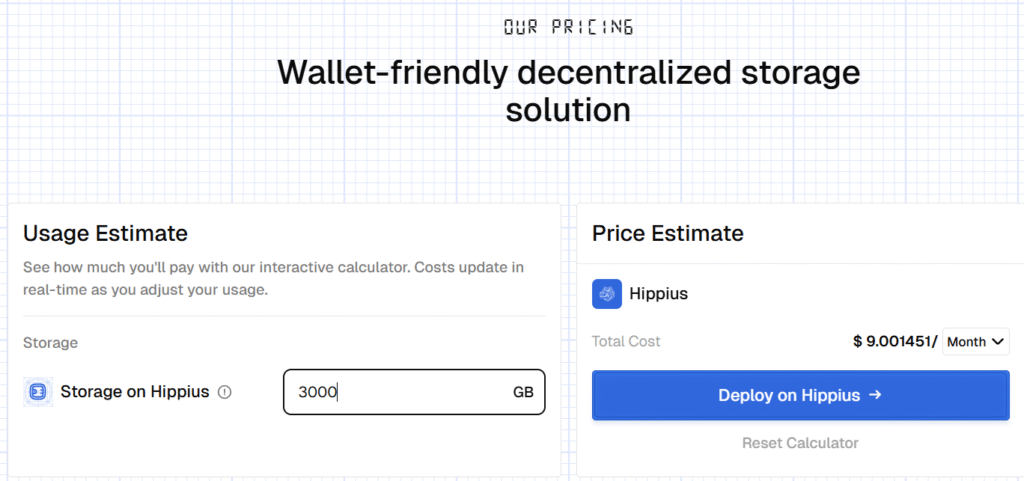
a. Hippius’ pricing model is far cheaper than those available in the ecosystem, it is also market-driven and usage-based,
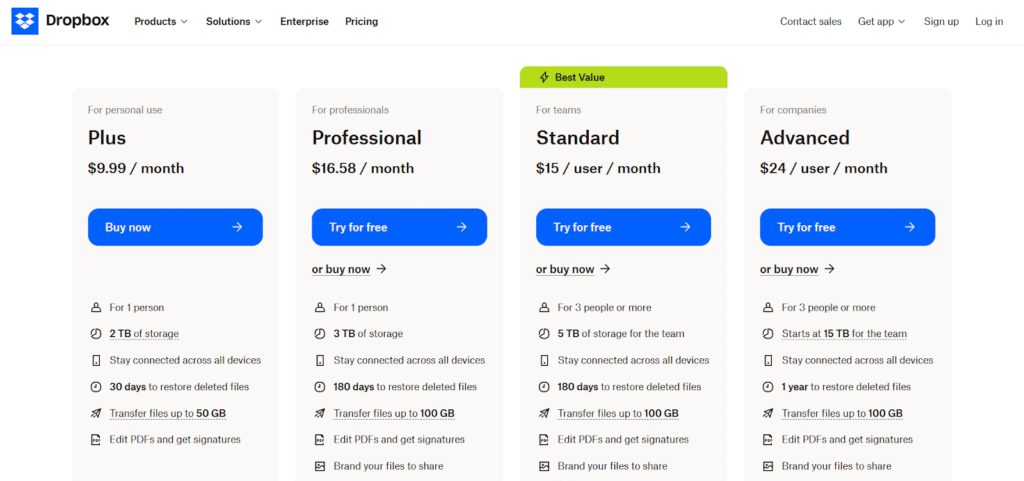
b. Dropbox manages fixed subscription tiers.
5. Transparency
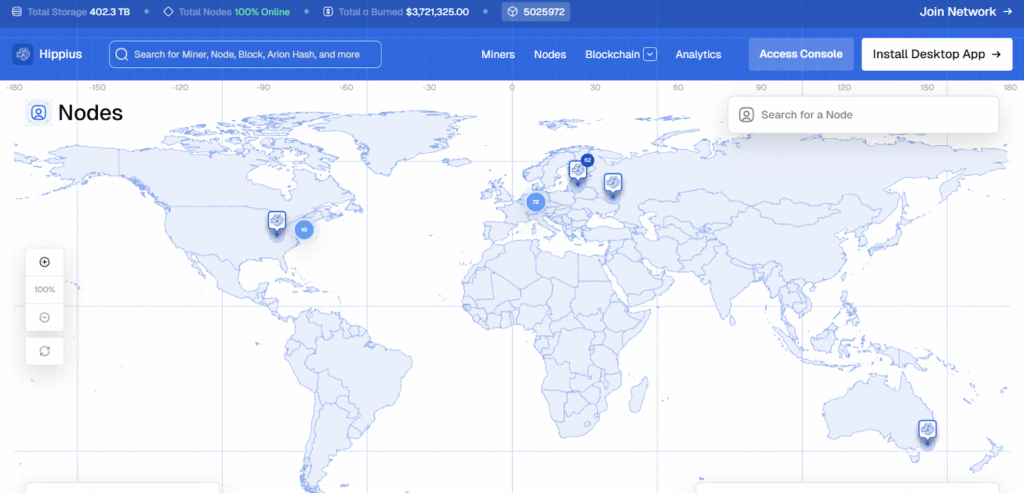
a. All of Hippius’ operations are coordinated on-chain, data are decentrally stored and the system is publicly auditable via Hipstats,
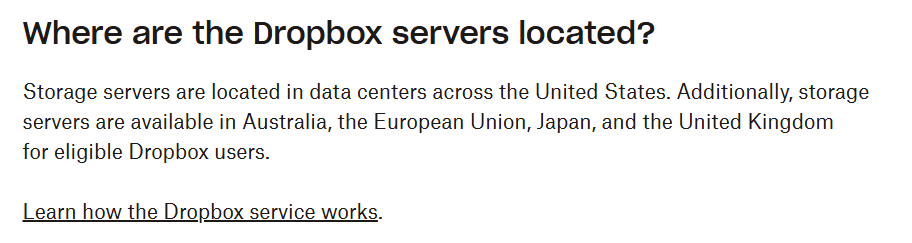
b. Dropbox have opaque internal systems, and data are stored in dedicated centres majorly in the United States.
Comparing Hippius to Dropbox is not about competition in the short-term, it is about illustrating a shift in design philosophy.
One prioritizes convenience through control, the other prioritizes trustlessness through decentralization.
The Future of Storage Will Be Owned, Not Borrowed
For years, cloud storage has operated on the premise that data can be stored somewhere else and users need to trust that it would be available when needed.
That model worked when data was passive, but became less efficient as data became active infrastructure for AI, applications, and digital economies.
Because the next generation of storage must do more by proving reliability, eliminating single points of failure, aligning incentives with performance, and giving users real control, Hippius is an early blueprint for that future.
Well, not just a place to store files, but also as a system designed to ensure that data remains accessible, verifiable, and truly owned.
And in a world increasingly defined by information, that shift is simply inevitable.
Enjoyed this article? Join our newsletter
Get the latest Bittensor & TAO ecosystem news straight to your inbox.
We respect your privacy. Unsubscribe anytime.



Be the first to comment