

The complexity of mining $TAO has long become its greatest strength and its biggest barrier to entry. While the network enables programmable markets for intelligence, mining often requires a deep mix of administration skills, crypto fluency, and technical patience.
That equation is now beginning to change.
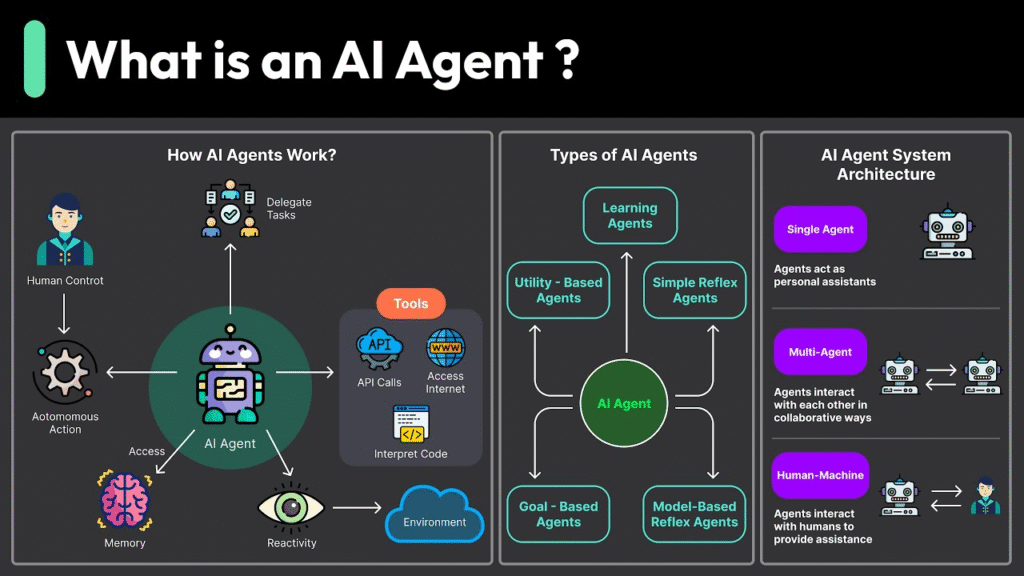
With the emergence of agentic systems like OpenClaw, a new model is forming, one where autonomous AI agents can handle the heavy lifting of setup, execution, and iteration, effectively compressing the learning curve and making subnet mining dramatically more accessible.
Understanding the Role of AI Agents in Mining
AI agents like OpenClaw typically behave very differently from a traditional chatbot. Rather than simply responding to prompts, it can take actions, configure environments, manage wallets, and execute workflows across systems.
Applied to Bittensor, this creates a powerful abstraction layer:
a. The agent understands subnet requirements and configurations,
b. It installs dependencies and deploys miners autonomously,
c. It iterates based on failure feedback, improving over time, and
d. It manages operational tasks that would otherwise require manual intervention.
In practical terms, what previously required hours or days of setup can now be initiated with a single instruction.
This transforms mining from a technical process into a coordination process, where the human defines intent and the agent executes.
A Structured Approach to Mining with an AI Agent
The first step to mining is to scout for a subnet that aligns with their interest, study it and familiarize with its mining requirements. After that, the next is going into mining proper.
Here’s a step-by-step guide to mining with an AI Agent:
1. Deploying a Hosted Agent Environment
Running agentic systems locally introduces significant security risks, especially when they are granted access to sensitive data such as wallets or credentials.
A more controlled approach is to use hosted environments like Seafloor.bot, where the agent operates in the cloud, isolated from personal systems.
This setup provides:
a. A sandboxed execution layer,
b. Reduced exposure to local exploits, and
c. Immediate deployment without infrastructure overhead.
Once initialized, the agent becomes accessible through a simple chat interface.
2. Initializing the Mining Stack
The first actionable step is instructing the agent to prepare for mining. This typically involves:
a. Creating a $TAO wallet,
b. Generating a public address for funding, and
c. Receiving initial capital to operate.
From there, the agent can be directed to explore the subnet ecosystem and identify viable opportunities.
A common prompt structure might involve:
a. Scanning available subnets,
b. Evaluating difficulty and resource requirements, and
c. Selecting a subset aligned with its capabilities.
This replaces manual research with autonomous discovery.
3. Subnet Selection and Deployment
Once targets are identified, the agent begins deployment. This includes:
a. Installing required frameworks and libraries,
b. Configuring miner instances,
c. Registering with selected subnets, and
d. Submitting initial entries for evaluation.
In practice, early attempts may fail, but this is part of the system’s strength. The agent continuously reviews validator feedback, diagnoses failure points, and adjusts configurations and retries.
This iterative loop mirrors how a human operator would learn, but at a significantly accelerated pace.
4. Managing Dependencies and External Integrations
Certain subnets require additional infrastructure, such as API access or compute environments. In these cases, the agent may:
a. Request API keys for external services,
b. Deploy compute instances where necessary, and
c. Allocate budget dynamically from its wallet.
However, human oversight remains important at this stage, particularly when sensitive credentials or higher-cost infrastructure is involved.
5. Monitoring Performance and Iterating
Mining success is not immediate. Instead, progress is measured through:
a. Active participation across multiple subnets,
b. Successful task execution and submissions, and
c. Gradual improvement in ranking and rewards.
Even without early rewards, the efficiency gains are clear. What matters is the agent’s ability to continuously refine its approach without requiring constant human input.
Why This Changes Everything
The introduction of agentic mining fundamentally reshapes access to Bittensor:
a. Complexity is abstracted,
b. Users no longer need deep sysadmin or crypto expertise,
c. Participation becomes scalable,
d. Multiple subnets can be mined simultaneously through a single agent,
e. Learning becomes automated,
f. Agents adapt faster than manual operators,
g. The ecosystem accelerates, and
h. More participants means more competition and better outputs.
In effect, this approach democratizes access to decentralized AI production in a way that was previously impractical.
The Future of Subnet Mining
Mining within Bittensor has traditionally required a rare combination of skills, creating a high barrier that limited participation to a small group of technically proficient users. Agentic systems like OpenClaw are beginning to dismantle that barrier, replacing manual complexity with autonomous execution and iterative intelligence.
While the model is still evolving, and not without risks, the direction is clear. The future of subnet mining is not purely human, and not purely automated, but a hybrid system where humans provide intent and agents handle execution at scale.
For those willing to experiment, this represents one of the most important shifts in how value is created and captured within decentralized AI networks.
Enjoyed this article? Join our newsletter
Get the latest TAO & Bittensor news straight to your inbox.
We respect your privacy. Unsubscribe anytime.


Be the first to comment