
Cloud computing today runs the internet, but it comes with a tradeoff. Most platforms are centralized, opaque, and dependent on a handful of providers controlling storage, compute, and pricing. You store your data, but you rarely know how it is handled, where it lives, or how costs are determined.
Hippius takes a different path.
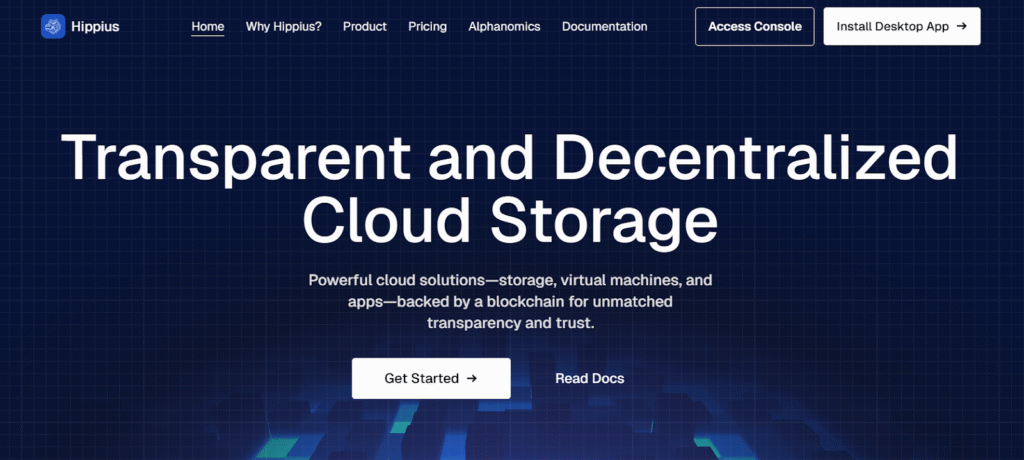
Built on Bittensor Subnet 75, Hippius reimagines cloud infrastructure as a transparent, decentralized marketplace where storage and compute are verifiable, distributed, and economically aligned.
This is an attempt to rebuild the cloud from first principles (not just another storage solution!)
A New Model for Cloud Services
Hippius offers a full stack of cloud services designed for both individuals and enterprises.
These include:
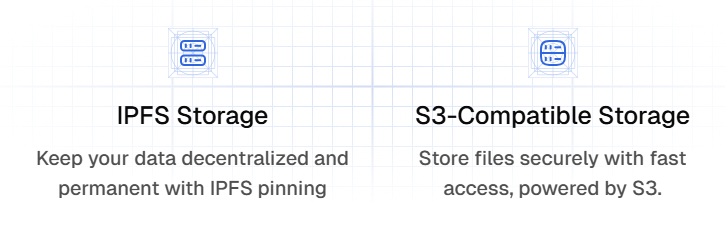
a. Decentralized storage via IPFS (Interplanetary File System), enabling permanent and tamper-resistant data hosting, and
b. S3-compatible object storage, allowing seamless integration with existing workflows.
What makes this model different is not just the services themselves, but how they are delivered.
Instead of relying on centralized infrastructure, Hippius distributes these services across a network of independent providers, all coordinated through blockchain logic and incentives.
Why Hippius Exists
The motivation behind Hippius is that traditional cloud systems suffer from three major limitations: Lack of transparency in existing infrastructures, single points of failure, and pricing inefficiencies.
Hippius addresses each directly by providing:
a. Global reliability comes from a distributed network of hardware providers rather than a single operator,
b. Transparent pricing is enforced on-chain, eliminating hidden costs, and
c. Trust is verifiable, as all transactions and service delivery are recorded on blockchain infrastructure.
This creates a system where users do not need to trust a provider blindly. They can verify everything.
How It Works: From Payment to ‘Delivery’
Hippius is designed to feel familiar on the surface, while operating very differently underneath (most importantly, leveraging the Bittensor ecosystem).
The process is straightforward:
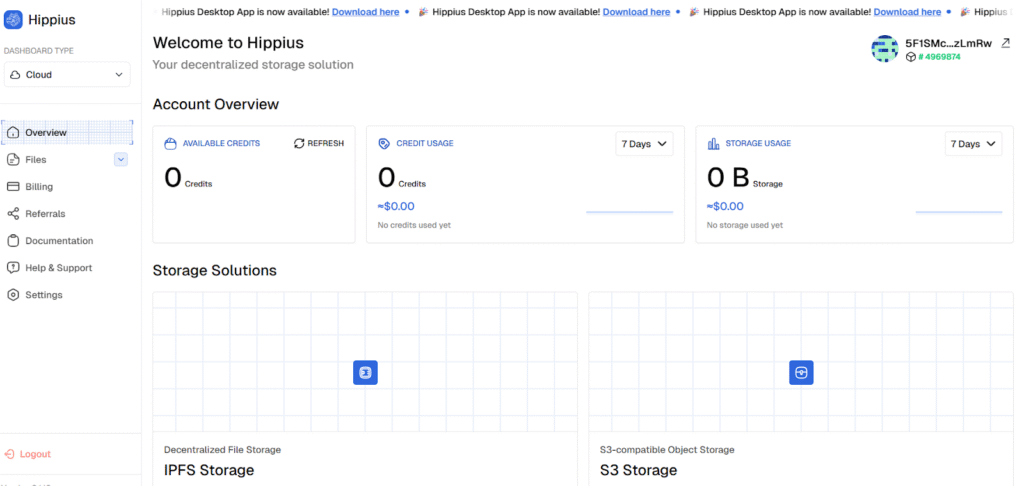
Official Website: Hippius’ Console
a. Users access services through a dashboard,
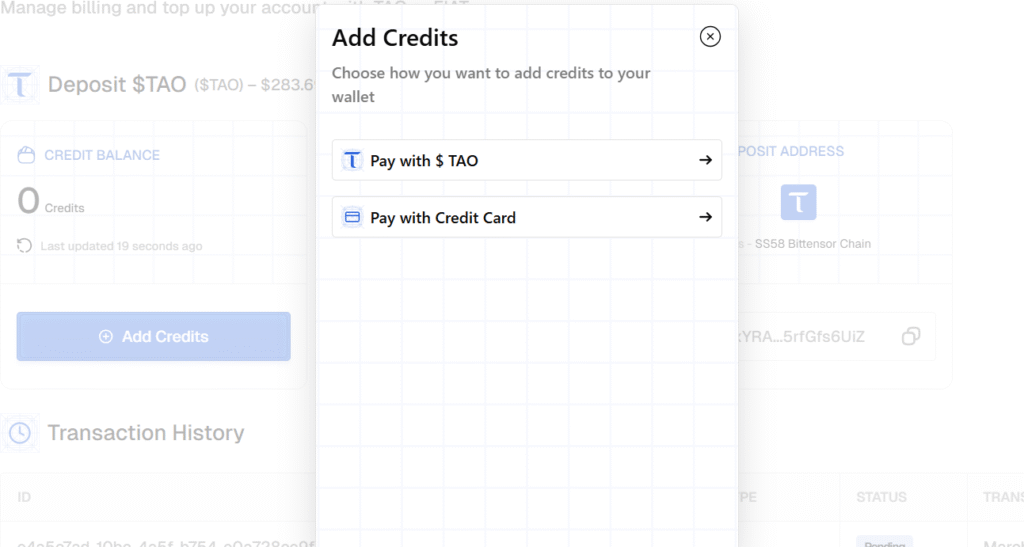
b. Payments can be made using fiat, or $TAO,
c. Credits are issued within the marketplace,

d. Users make “service requests” which are submitted to validators,
But then, under the hood:
e. Validators assign tasks to miners,
f. Miners deliver storage, and
g. Rewards are distributed to them based on performance
This flow ensures that every interaction, from payment to execution, is measurable and auditable.
Under the Hood: The Architecture
Hippius operates as a dual-layer system connected to Bittensor. The core components of this is:
a. Bittensor Blockchain: Acts as the parent network, providing emissions and coordination. It is through this layer that validators assign tasks, verify outputs, and report performance to Bittensor, miners provide actual resources across IPFS storage, and S3 storage.
b. Hippius Blockchain (Substrate-based): Handles internal logic, marketplace operations, and $ALPHA economies. This part hosts the marketplace layer which serves as the central hub for service requests and credit management.
Storage Systems: Two Approaches, One Goal
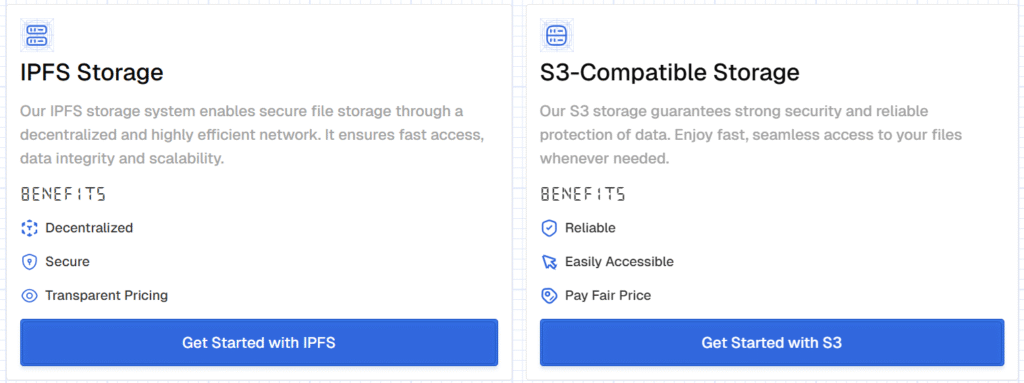
Hippius offers two complementary storage models, each optimized for different use cases.
a. IPFS (Interplanetary File System) Storage: Fully Decentralized and Verifiable
This system is built for permanence and integrity, and through it, files are stored using content addressing, ensuring they cannot be altered unnoticed
Also, data is pinned across multiple miners for redundancy while validators continuously monitor availability and reassign storage when needed
Best suited for:
a. Public data
b. Immutable content
c. High-integrity storage requirements
2. Hybrid S3 Storage: Familiar, Flexible, Scalable
For users who need performance and compatibility, Hippius provides S3-like storage fully-compatible with existing S3 tools and workflows, that uses erasure coding and replication for reliability.
This is best suited for:
a. Applications requiring frequent updates,
b. Private data with access controls, and
c. Enterprise workflows.
Built for Real Use Cases
Hippius is not theoretical, it is designed to support real-world applications across multiple domains. Some key use cases include:
a. AI Model and Dataset Hosting: To store and access large datasets efficiently across distributed infrastructure,
b. Decentralized Backups: To eliminate single points of failure with global redundancy,
c. Content Delivery Networks: To serve content faster through decentralized edge storage,
d. Web3 Application Storage: To power dApps with scalable, developer-friendly infrastructure,
e. NFT and Digital Asset Storage: To preserve metadata and media on immutable systems, and
f. Secure File Sharing: Enable privacy-first platforms with end-to-end encryption.
Security and Consensus: Designed for Trust
Hippius leverages proven blockchain mechanisms to ensure reliability.
a. BABE (Blind Assignment for Blockchain Extension) consensus enables efficient and secure block production,
b. Nominated Proof of Stake (NPoS) aligns validators and nominators, and
c. “Slashing mechanisms” penalize malicious behavior.
Together, these systems ensure that the network remains both secure and performant.
Why Hippius Matters for Bittensor
Hippius represents an important evolution within the Bittensor ecosystem. While many subnets focus on AI models, Hippius expands the network into infrastructure:
a. It turns storage into commodities that can be priced and rewarded,
b. It connects real-world demand with on-chain incentives, and
c. It demonstrates how Bittensor can support full-stack decentralized services.
This is a shift from abstract intelligence markets to tangible utility.
Rebuilding the Cloud, Transparently
Hippius is not trying to compete with traditional cloud providers on their terms, it is redefining the model entirely.
By combining decentralized infrastructure, blockchain transparency, and incentive-driven coordination, it introduces a system where users gain visibility, control, and flexibility over their data and compute.
For the fact that it is built on Bittensor, it inherits a powerful economic layer that continuously rewards performance and participation.The result is a cloud platform that is not just distributed, but accountable. In a world increasingly dependent on data, that shift may matter more than anything else.
Enjoyed this article? Join our newsletter
Get the latest Bittensor & TAO ecosystem news straight to your inbox.
We respect your privacy. Unsubscribe anytime.



Be the first to comment