

Most AI systems today are brilliant, but forgetful. They can generate code, summarize research, and hold conversations, but once the session ends, the memory dissolves. There is no continuity, no reflection, no moral growth, and no sense of emotional awareness.
Loosh AI (Bittensor Subnet 78) is working on something fundamentally different, a decentralized cognition layer for robotics and autonomous agents, one that introduces persistent memory, adaptive reasoning, ethical frameworks, and emotional inference.
In simple terms, Loosh wants to give robots and AI agents an inner world which is not a temporary response engine, but a cognitive system that remembers yesterday, reasons about today, and improves for tomorrow.
The Core Idea: Cognition That Persists
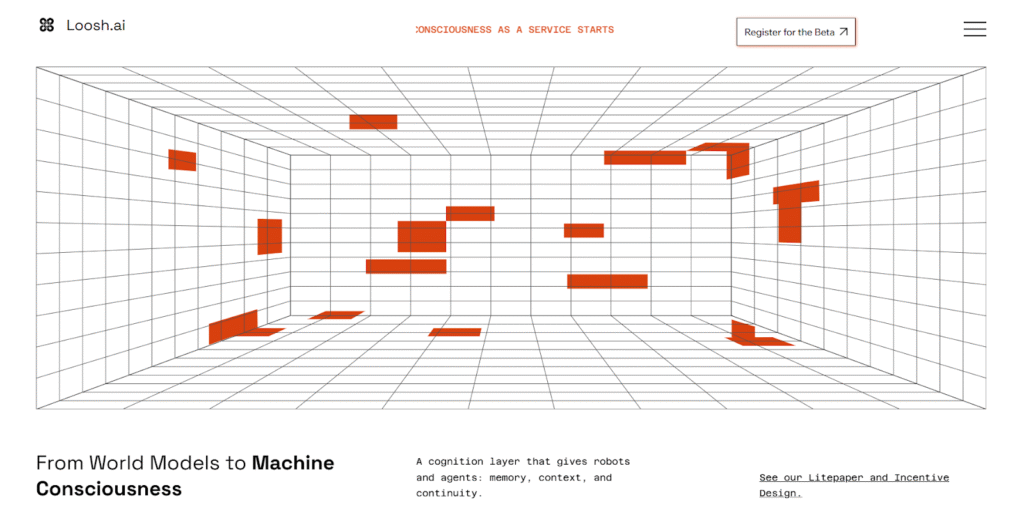
Loosh is a decentralized cognition system operating within the Bittensor ecosystem as Subnet 78. Basically, its aim is to empower autonomous systems with long-term memory, adaptive & evolving reasoning, ethical decision frameworks, and emotional state inference
Instead of stateless outputs, Loosh envisions agents that remember previous interactions, reflect on outcomes, align decisions with defined moral parameters, and interpret emotional signals
This is particularly relevant for robotics, where continuity and context matter. A household robot, for example, should not treat each day as if it is the first time it has ever met you.
How the System Works
Loosh operates as a competitive, decentralized subnet on Bittensor. Thus, it works on the existing architecture that powers subnets on the ecosystem:
a. MINERS execute inference tasks from Loosh’s Cognitive Engine. These tasks includes live reasoning prompts, structured cognitive challenges, and emotional state detection tasks, including future EEG-based integrations
Their job extends beyond responding alone, it is to demonstrate consistent, calibrated reasoning across time.
b. VALIDATORS assess miner outputs based on speed, quality, and consensus alignment
Scoring is calculated using a 24-hour EMA (Exponential Moving Average). Weight updates occur every 72-minute, creating a dynamic evaluation cycle that continuously adjusts performance incentives.
This structure ensures performance is not judged on a single event, consistency is rewarded, and outliers do not distort long-term evaluation
The result is a cognition market where quality compounds over time.
Loosh’s Subnet Portal: Making Cognition Observable
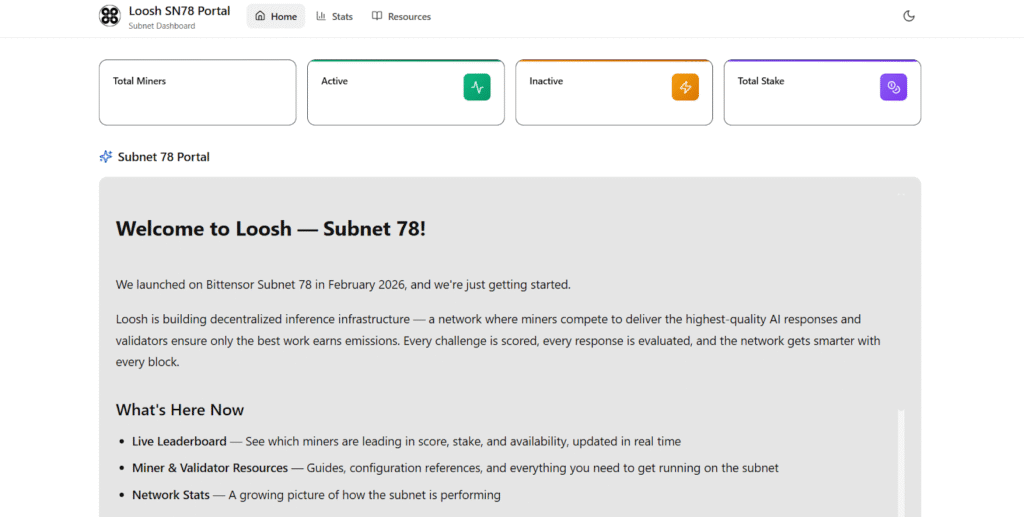
One of Loosh’s distinguishing features is transparency. By visiting the subnet portal, participants can observe the network in real time. This is not abstract infrastructure hidden behind dashboards only core developers can see.
The portal exposes:
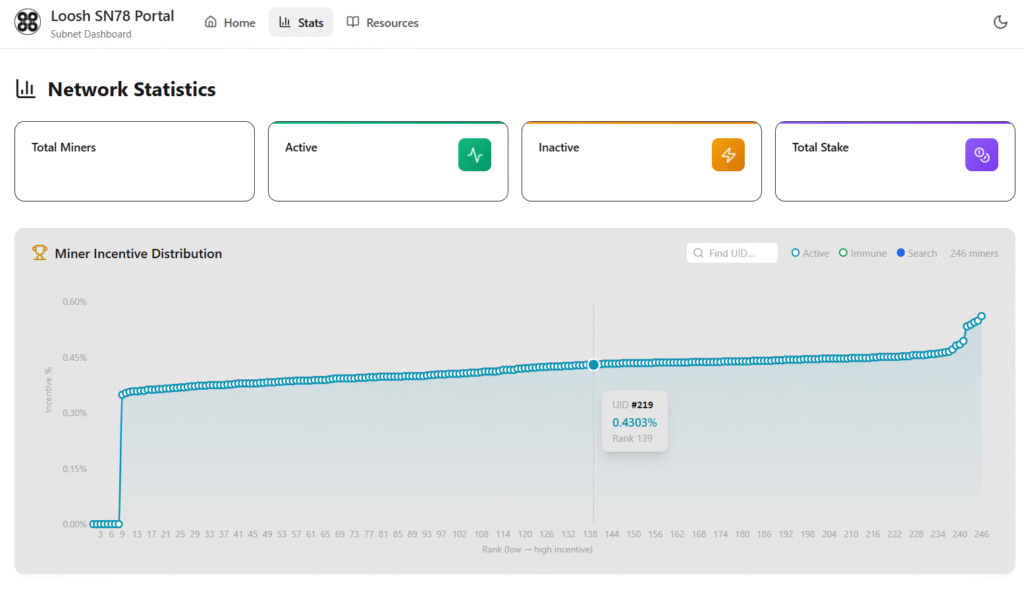
NETWORK VISIBILITY: Real-time subnet statistics, active miner distribution, stake allocation metrics, and transparent ‘miners’ leaderboard rankings.
Users can easily see which miners are performing well and how the network evolves over time. This transforms cognition from a black box into a measurable system.
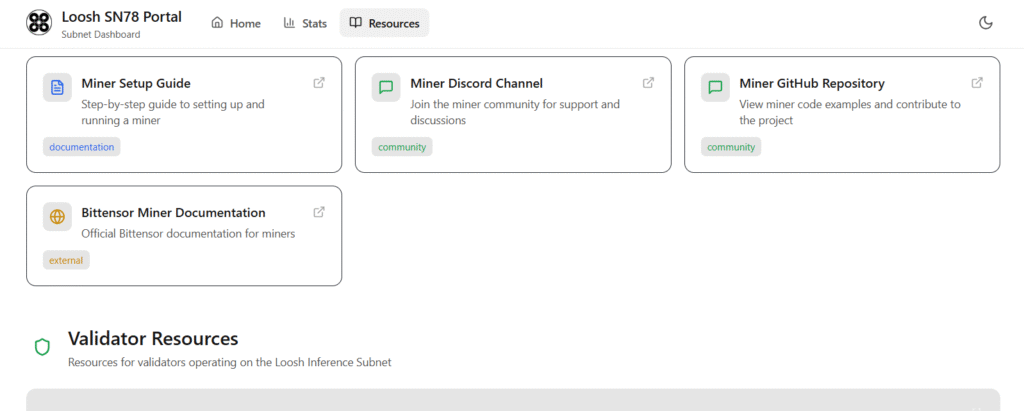
INFRASTRUCTURE FOR BUILDERS: Loosh positions its portal as more than a stats page, it also doubles as a coordination layer.
Constructive participation requires clarity, so the portal consolidates:
a. Technical documentation for Loosh and Bittensor,
b. On-chain explorer tools,
c. GitHub repositories for deployment and contribution (important for miners and validators), and
d. Direct links to community coordination channels.
For developers building robotics systems or AI agents, this means cognition is not theoretical. It is deployable.
Why Decentralized Cognition Matters
The broader AI industry has concentrated power in centralized providers as most advanced reasoning systems live behind proprietary APIs.
Loosh proposes a different architecture:
a. Cognition as a competitive market,
b. Ethical reasoning developed collaboratively,
c. Emotional inference evaluated transparently, and
d. Memory persistence managed across a decentralized network.
Instead of one company defining the boundaries of robotic intelligence, a distributed ecosystem iterates in public.
This aligns with the broader thesis behind Bittensor: specialized intelligence can emerge from competitive open markets when evaluation is transparent and incentives are clear.
Loosh applies that thesis to cognition itself.
From Architecture to Active Intelligence
Loosh is still early in its development cycle. This simply means that emotional inference integrations, expanded reasoning modules, and deeper robotics integrations remain under active development. But, the architecture is already in place.
Persistent memory is being evaluated, ethical reasoning is being structured, performance metrics are live, validators are scoring, and miners are competing.
Cognition is no longer a closed laboratory experiment as it used to be, it is gradually becoming a decentralized marketplace.
If the next phase of AI involves systems that remember, reason responsibly, and adapt over time, then the question is not whether cognition matters, it is “who builds it?”
Loosh is making the case that it should be built in the open.
Enjoyed this article? Join our newsletter
Get the latest Bittensor & TAO ecosystem news straight to your inbox.
We respect your privacy. Unsubscribe anytime.


Be the first to comment