

The community recently gathered for an open Q&A session at Crypto AI Day events held in Bedfordshire, United Kingdom brought founders, builders, subnet operators, and users into the same room for an honest conversation about where Bittensor is heading.
The discussion revealed a maturing network where economic pressures are increasing, accountability is rising, and product quality is becoming the defining factor of survival.
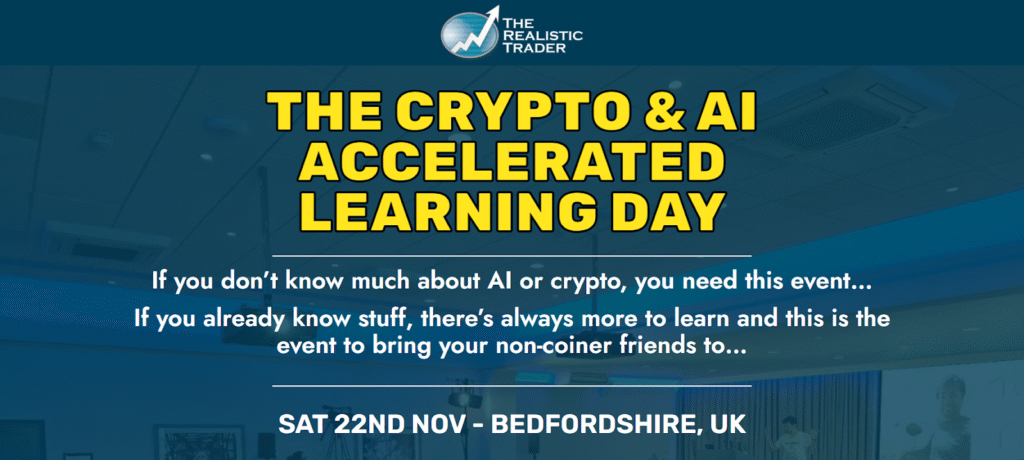
With no prepared statements and no formal agenda, the discussion flowed naturally from halving effects to subnet risk, privacy, infrastructure, revenue, and the growing pressure for real commercial products.
Understanding the Halving and Its Market Impact
The conversation opened with concerns about whether the halving would lead to double pricing across subnet markets. The response to this from the panel was clear and pragmatic:
a. The halving affects liquidity entering pools
b. $ALPHA emissions reduce on their own cycle
c. Reduced liquidity increases volatility
d. Prices rise where there is genuine buy pressure, and fall where demand is weak
Rather than a simple “price doubling,” the halving acts as a pressure test that rewards real utility and exposes speculation.
Subnet Risk, Deregistration, and User-Friendly Abstraction
Questions soon turned to subnet performance and the risk of underperformers dragging down the ecosystem. To this, Bittensor’s built-in Darwinian mechanics was emphasized:
a. Subnets that fail benchmarks are deregistered
b. Mediocre performance leads to stagnation or pivoting
c. End-users should never interact with Bittensor complexity directly
This, however, reinforced a broader theme that the protocol is complex by design, but products built on it must feel simple, intuitive, and mainstream.
Desktop vs Web: Why Hippius Uses Local Applications
When asked why Hippius offers a desktop application instead of focusing entirely on the web, the explanation to this from the panel was that:
a. The desktop app provides a siloed, secure environment
b. Payments and VM (Virtual Machine) rentals require isolated local controls
c. The web console still exists for those who prefer it
The design favors safety and operational control, especially for users interacting with compute and financial components.
Quality Control, Scams, and the Threat of Big Corporations
A recurring question was how Bittensor prevents low-quality or malicious subnets from flooding the system, and whether large corporations could dominate the network.
The answers highlighted several structural protections:
a. Deregistration automatically removes low-value subnets
b. Acquiring a subnet offers no advantage without the reward mechanism
c. The incentive system (not ownership) is the moat
d. Bittensor rewards value creation, not brand power
Bittensor’s economic model naturally rejects non-performers, regardless of who operates them.
Real Revenue Models: The Case of RESI Labs
The session took a practical turn when participants asked how subnet builders create real revenue outside of emissions. The example of RESI offered clarity:
a. Revenue comes from real-estate tokenization and transaction fees
b. Tokens represent shares of LLCs (Limited Liability Companies) holding the actual properties
c. The model can run on any chain that supports tokenized assets
It demonstrated how subnets can build commercially grounded businesses with real-world demand.
Dependencies, Failure Handling, and Pricing Decisions
The audience raised valid concerns about subnet reliability and pricing structure. The panel outlined a realistic approach:
a. Treat subnet dependencies like any service provider
b. Migrate if the service fails
c. Early pricing is often low to gain market share
d. Decentralized teams have lower R&D (Research and Development) overhead, enabling competitive pricing
e. Some teams choose premium pricing to attract quality users and feedback
The ecosystem is still forming its economic boundaries, but market-driven pricing is already emerging.
Revenue Pressure and the End of Subsidized Survival
A notable theme was whether many subnets could survive outside Bittensor’s ($TAO) ecosystem. According to builders on the panel, the answer is increasingly tied to revenue:
a. Recent protocol updates force subnets to justify their existence
b. Emissions recycling is discouraged
c. Real products, real users, and real revenue will determine survival
d. $TAO holders economically “vote” on subnet quality
This marks a shift from experimentation to accountability.
Why Bittensor Should Become Invisible to the End User
Panelists emphasized repeatedly that Bittensor’s sophistication should never reach the end consumer. Mass adoption requires eliminating all crypto friction:
a. No one wants to think about emissions, mining, or staking.
b. Users want a fast, intuitive, reliable product.
c. The crypto layer should be silent, automatic, and invisible.
The winning subnets will be the ones that feel like normal SaaS companies, not blockchain experiments.
Ecosystem Funding vs Traditional Raising
The conversation highlighted a unique feature of Bittensor:
a. It offers continuous, market-driven funding.
b. Subnets can iterate before revenue.
c. Emissions shift away from weak performers.
d. Only value creators survive long-term.
This ensures that Bittensor serves as a decentralized incubator but one that self-corrects, constantly.
Privacy Options for Commercial Users
When the question about privacy requirements for enterprise users was asked, a new offering was revealed:
a. A fully-private mode where miners never see user code
b. A discounted mode for users who allow anonymized benchmarking
This dual model caters to both enterprise confidentiality and open-community improvement.
Climbing the Emissions Ladder Without Gaming the System
Participants asked how subnets can strengthen their emissions performance. The response encouraged discipline:
a. $TAO Flow eliminates stagnant subnets
b. Reinvesting emissions back into the subnet is discouraged
c. Focus should be on business growth, not internal recycling
d. Consumer-facing products should abstract crypto entirely
The takeaway is that emissions should be an outcome, not a strategy.
Could Big Tech Dominate Bittensor?
The concern resurfaced: what if large corporations bought up subnet slots? It was revealed that:
a. Poor performance gets deregistered (regardless of who the owner is)
b. Large firms still struggle to hire subnet-level talent
c. Incentives matter more than scale
d. Corporations may fork the tech or acquire products, but incentives keep the core resilient
Bittensor resists centralization through performance-based economics.
Can Bittensor Help Countries Avoid the U.S. (United States) Data Monopolies?
A geopolitical question shifted the discussion toward sovereignty and data privacy. Key leaders on the panel made two key points:
a. Decentralization is attractive for those seeking independence from U.S. tech
b. National data laws like GDPR (General Data Protection Regulation) still force domestic storage requirements
Bittensor helps expand sovereignty, but compliance realities remain.
Disaster Recovery and Infrastructure Redundancy
Infrastructure stability was a major concern, especially for products built on multiple subnets. The following approach was outlined:
a. Multiple off-site backups
b. Redundant storage providers
c. One-click migration options
d. Hybrid use of centralized and decentralized storage
e. Segmentation so product failures don’t follow subnet failures
Subnets can fail, but products shouldn’t.
Conclusion
The open Q&A made something clear: Bittensor is entering a new chapter. The ecosystem is becoming more competitive, more product-driven, and far more accountable.
Builders are now expected to deliver real user value, commercial viability, and operational resilience. Emissions alone are no longer the justification for a subnet’s existence.
As the network matures, the teams that succeed will be those who embrace simplicity, focus on customers, and build sustainable businesses powered by decentralized intelligence.
Enjoyed this article? Join our newsletter
Get the latest Bittensor & TAO ecosystem news straight to your inbox.
We respect your privacy. Unsubscribe anytime.



Be the first to comment