
Every time you check your crypto wallet balance, send a transaction, or use a decentralized app, you’re using something called RPC (Remote Procedure Call) nodes. These are the behind-the-scenes infrastructure that lets apps talk to blockchains.
Most people use centralized services like Infura or Alchemy for this without knowing it. These companies control the infrastructure, charge whatever they want, and create single points of failure. That is, when they go down, thousands of apps stop working simultaneously.
BlockMachine, launched in January 2026 as Bittensor Subnet 19, is changing this by turning blockchain infrastructure into a competitive marketplace where providers compete on price and performance.
What BlockMachine Actually Does
BlockMachine provides RPC services; the connections that let wallets, exchanges, and apps read blockchain data and send transactions. Instead of one company running all the infrastructure, BlockMachine coordinates hundreds of independent node operators who compete to provide the best service.
Here’s how it works. When an app needs blockchain data, that request goes to BlockMachine’s network. Multiple miners (people running nodes) compete to fulfill that request. They bid on how much they’ll charge per unit of computing work. The system automatically routes the request to providers offering the best combination of low price, fast response, and accurate results.
Miners who perform well earn TAO token rewards. Miners who are slow, expensive, or provide wrong information get pushed out automatically. No trust or reputation needed, just objective performance measurements.
This creates constant pressure for improvement. Miners want to earn more rewards, so they optimize their systems, reduce costs, and improve speed. Over time, the entire network gets faster and cheaper through pure competition.
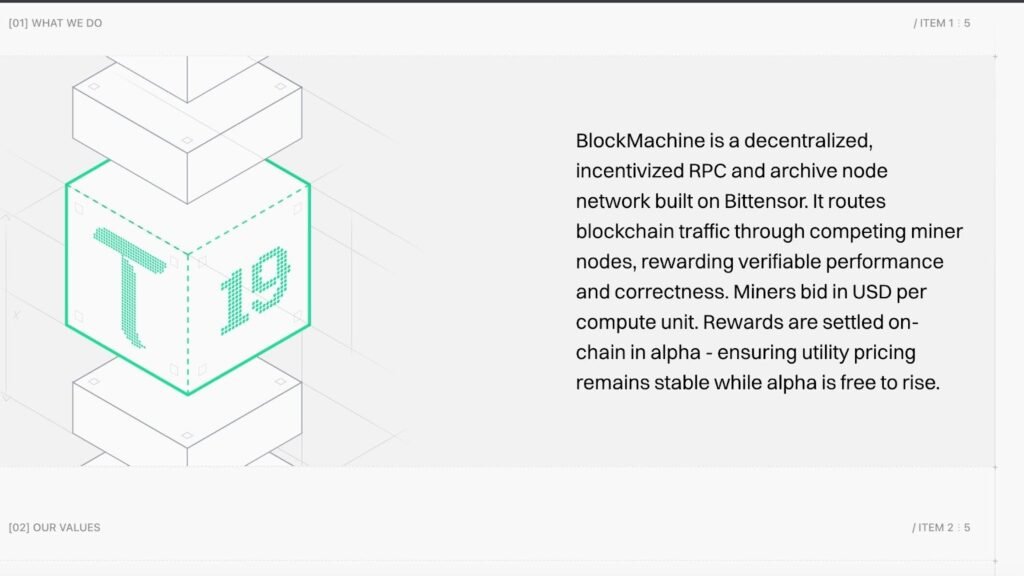
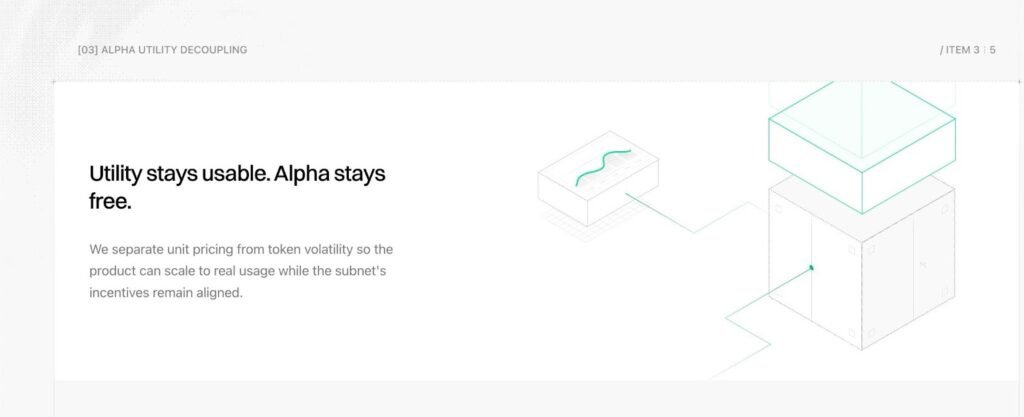
The pricing model is clever too. Users pay in regular US dollars per compute unit, which keeps costs predictable regardless of crypto price swings. But miners receive rewards in TAO tokens, which can appreciate in value as the network grows. This separates the utility (cheap, stable infrastructure) from the investment (TAO tokens that could increase in value).
Why This Matters Beyond Just Saving Money
The problem with centralized RPC providers goes deeper than just cost. When one company controls infrastructure, they become a single point of failure. Infura had a major outage in November 2020 that took down MetaMask, Uniswap, and countless other services simultaneously. Users couldn’t access their wallets or make trades for hours. One company’s problem became everyone’s problem.
With BlockMachine, if one miner’s node goes down, traffic automatically routes to others. No single failure can take down the whole network. Apps using BlockMachine stay online even when individual providers have issues.
There’s also the trust problem. Centralized providers see all your queries, which wallets you check, which transactions you send, which apps you use. They could track your activity, sell your data, or get hacked and leak it. With BlockMachine’s decentralized approach, no single entity sees all the traffic or controls all the data.
Vendor lock-in is another issue. Once you build your app around Infura’s specific features, switching providers means significant development work. BlockMachine uses standard formats, so switching between providers on the network is seamless. You’re never trapped.
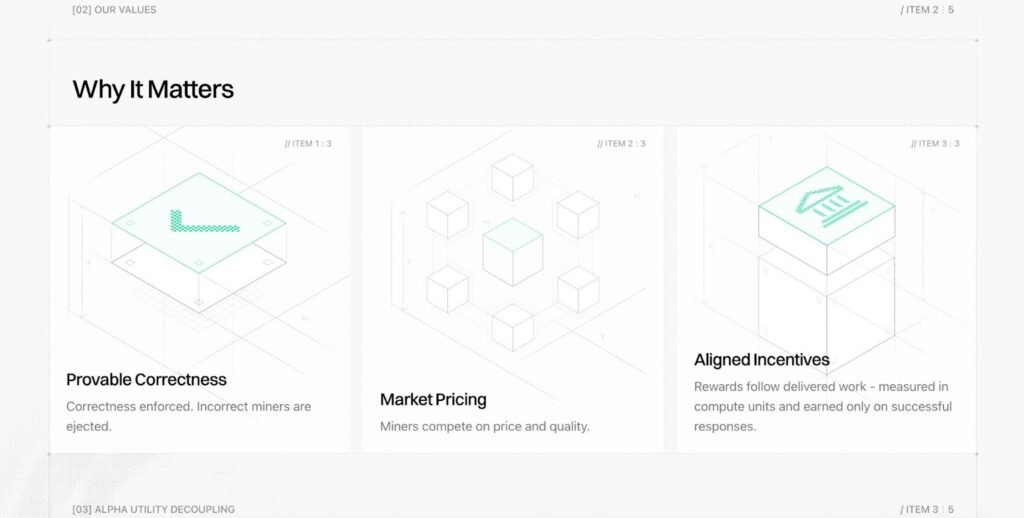
The costs matter too. Centralized providers charge subscription fees or per-call pricing that gets expensive at scale. Because BlockMachine miners compete openly, prices naturally settle at whatever level makes sense for actual computing costs plus reasonable profit. No monopoly markup.
The Real-World Results Already Happening
Taostats, a major Bittensor analytics platform, already routes its production RPC traffic through BlockMachine. Every time someone checks Bittensor network stats on Taostats, they’re using BlockMachine’s infrastructure without knowing it.
The subnet also has a $30,000 per month customer lined up and ready to integrate. That’s real revenue from real demand, not just promises about future potential.
On January 26, 2026, BlockMachine achieved the highest daily chain buyback in all of Bittensor at 101 TAO. This means the network bought back 101 TAO tokens that day, a sign of strong economic activity and demand for the service.
The project was just launched in January 2026, so this early traction shows genuine need for decentralized RPC infrastructure.
How BlockMachine Differs From Flamewire
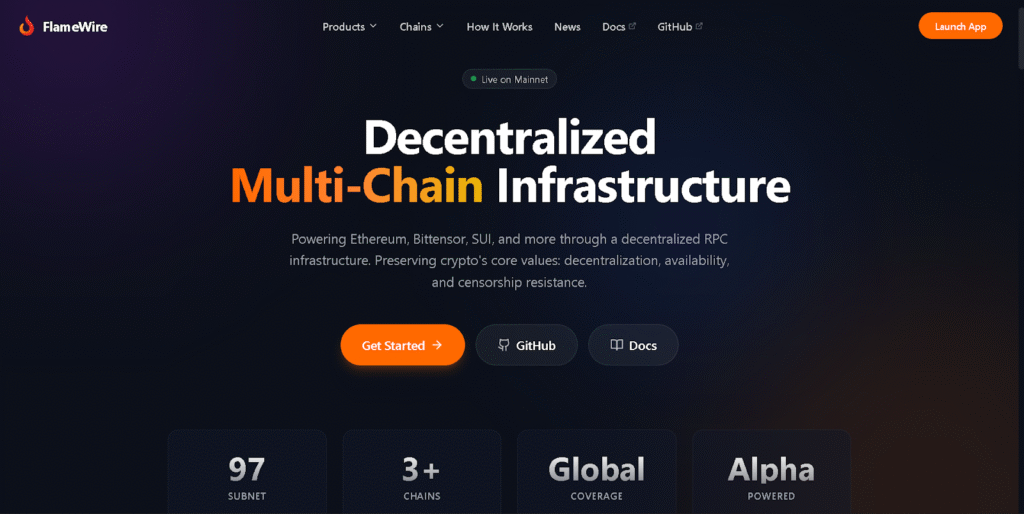
BlockMachine isn’t the only decentralized RPC project on Bittensor. Flamewire, running as Subnet 97, is a direct competitor tackling the same problem. Both want to replace centralized providers like Infura with decentralized alternatives. But they approach the challenge differently.
Flamewire launched earlier, around mid-2025, and already supports multiple blockchains including Ethereum, Sui, and Bittensor. They focus on reliability through redundancy and intelligent routing. Their system distributes traffic globally and reroutes around problems automatically. Users fund accounts or stake SN97 alpha tokens to access services or get free tiers.
BlockMachine takes a harsher approach to quality control. Instead of just routing around problems, BlockMachine actively ejects miners who provide incorrect data or poor performance. There’s no trust or reputation system, only objective measurements of throughput, latency, and correctness. If your node fails these measurements, you’re out.
The pricing models also differ. Flamewire ties pricing more directly to traffic and token staking. BlockMachine deliberately separates the two; users pay in stable US dollars per compute unit regardless of crypto volatility, while miners earn TAO rewards that can appreciate independently. This decoupling means users get predictable costs while miners can benefit from token price increases.
Philosophy matters too. Flamewire positions itself as a “public utility backbone” for the Bittensor AI economy, building multi-chain infrastructure with established global coverage. BlockMachine calls itself a “deep engineering subnet” focused on pure economic pressure driving continuous optimization. The idea is that harsh competition naturally forces excellence and cost reduction without needing central planning.
Both projects have merit. Flamewire offers proven multi-chain support and established infrastructure. BlockMachine offers stricter quality enforcement and clearer separation between utility costs and investment upside. The competition itself benefits users, because when two subnets compete to provide the same service, both improve faster and keep prices down.
For developers choosing between them, it comes down to priorities. Need established multi-chain coverage with proven reliability? Flamewire is the safer choice. Want the strictest quality controls and competitive pressure? BlockMachine might perform better. Or use both; decentralization means you’re not locked into one provider.
Having multiple decentralized RPC options on Bittensor proves the model can scale and that different approaches can coexist. Users win when projects compete to serve them better rather than extract maximum profit from captive customers.
How It Compares to Centralized Alternatives
Centralized providers are single companies that own and operate all the nodes. They decide pricing, features, and who gets access. Their infrastructure costs are whatever they say they are, and you have no way to verify or challenge them.
BlockMachine is a marketplace. Hundreds of independent operators run nodes and compete for business. Pricing emerges from competition rather than corporate decisions. Performance is objectively measured and verified, so miners can’t fake good service to earn rewards.
When Infura innovates, it’s because their product team decided something was worth building. When BlockMachine improves, it’s because miners have financial incentives to outcompete each other. Economic pressure drives continuous optimization in ways corporate planning can’t match.
Centralized providers also lack transparency. You don’t know how they route traffic, which regions they serve best, or what their actual performance metrics are beyond what they choose to share. BlockMachine runs on Bittensor, so all activity is publicly verifiable. Performance measurements, routing decisions, and miner earnings are all visible on-chain.
How Regular People Can Actually Use BlockMachine
Most people won’t interact with BlockMachine directly, because it’s an infrastructure that apps use behind the scenes.
The main way regular users benefit is by using apps and wallets that integrate BlockMachine for their blockchain connections. As more developers choose BlockMachine for their infrastructure needs, users automatically get the benefits of faster, cheaper, more reliable service without changing anything about how they use apps.
For people with technical skills who want to participate more actively, you can become a miner by running nodes that serve RPC requests. This requires setting up infrastructure, running the BlockMachine software, and competing to provide good service. Miners bid in US dollars for work and earn TAO rewards based on performance.
There’s also the option to become a validator, which means measuring and verifying the performance of miners. Validators ensure the network only rewards nodes that actually provide quality service.
Both mining and validating require technical knowledge and some investment in infrastructure, but they’re accessible to people with server management experience, not just large data centers.
The easiest way to stay updated as the project develops is joining the waitlist at blockmachine.io and following their developments.
The Team and Foundation
BlockMachine was founded by @mogmachine, who also created Taostats, one of the most important analytics platforms for Bittensor. This connection matters because Taostats has deep knowledge of what infrastructure Bittensor actually needs, and they’re putting their own traffic through BlockMachine as a live test.
The team is described as “tier-S” quality but keeps a low profile, focusing on building rather than marketing. This fits the overall approach, letting the infrastructure speak for itself through performance rather than hype.
The GitHub repository is public at github.com/taostat/blockmachine, so developers can review the code, understand how it works, and contribute if they want. This transparency is important for infrastructure that needs to earn trust.
What Happens Next
BlockMachine is expanding to more blockchains beyond Bittensor. The plan includes adding support for Ethereum and Binance Smart Chain, which would dramatically increase the potential customer base and traffic.
This makes sense because the same infrastructure that serves Bittensor RPC requests can serve other blockchains too. Each additional chain creates more demand, more miner competition, and more rewards flowing through the network.
As more apps integrate BlockMachine, the network effect grows stronger. More users mean more revenue, which attracts more miners, which improves service, which attracts more users. These positive cycles can accelerate quickly once they start.
The subnet is still very new, launching in January 2026. But the early metrics, real production traffic, paying customers, and strong economic activity all suggest real demand exists for what they’re building.
Whether BlockMachine becomes the standard infrastructure for decentralized apps or remains a niche alternative depends on execution. But the fundamental value proposition is clear: blockchain infrastructure should be competitive, transparent, and decentralized rather than controlled by a few companies.
For developers tired of outages, unpredictable pricing, and vendor lock-in from centralized providers, BlockMachine offers a working alternative right now. For users, it means the apps they use could become more reliable and cheaper to operate. For the Bittensor ecosystem, it’s critical infrastructure that other subnets can build on top of.
Website: blockmachine.io
Check out their GitHub at blockmachine
Follow @blockmachine_ on X
Enjoyed this article? Join our newsletter
Get the latest Bittensor & TAO ecosystem news straight to your inbox.
We respect your privacy. Unsubscribe anytime.


Be the first to comment