

Bittensor continues to evolve into one of the most ambitious experiments in decentralized coordination and incentive design. It has, then, grown into a living, breathing representation of capitalism in digital form.
On TAO Pod’s Episode 12 held on Thanksgiving day, Joseph Jacks (JJ) and James Altucher explored why Bittensor represents the next chapter of digital capitalism, how subnets mirror entrepreneurial talent, and why teaching others is key to mastering the ecosystem.
This chat captures the essence of what makes Bittensor powerful, why its incentive design is different from anything before it, and how it creates career paths that did not exist even three years ago.
Skin in the Game: Why Advocates Should Be Participants
JJ begins with a principle from Nassim Taleb’s Skin in the Game. “Advocacy is most credible when someone personally participates in the system they support.” In the world of Bittensor, this means owning $TAO, running validators, mining, building products, or educating the community.
Real conviction grows through involvement.
As JJ notes, he deepened his own understanding by teaching others in the community, hosting the podcast, and continually exploring how subnets work. To him, teaching forces clarity, sharpens perspective and increases conviction.
James agrees. Part of the reason he launched TAO Daily and joined the TAO Pod was to learn faster and more deeply.
Bittensor as Digital Capitalism: A Generalization of Bitcoin’s Incentive Design
The conversation revisits JJ’s now well-known framing: “Bitcoin is digital capital. Bittensor is digital capitalism.”
Bitcoin’s proof of work incentivizes the expenditure of energy to secure a monetary network. Bittensor generalizes this design. Instead of one global puzzle, it enables an unlimited number of incentive mechanisms that reward useful work.
Bitcoin has one Satoshi but Bittensor has 128 Satoshis today and will eventually have thousands. Each subnet owner is effectively an entrepreneur. They design a competition, define incentives that attract miners who deliver real world computational value.
This is digital capitalism.
It mirrors how business works in the physical world: create something useful, attract customers, and reward contributors.
Subnets as Companies: Incentive Mechanisms Become Business Models
James gives a simple comparison, he noted that a company is shaped by its incentive mechanisms.
Employees need incentives to work, customers need incentives to pay and investors need incentives to fund.
A Bittensor subnet is no different, subnet owners define puzzles that reward miners for producing value. This may include training models, generating 3D-assets, calculating weather predictions, building software engineering agents, or producing structured data for enterprise customers. The flexibility is limitless.
JJ explains that the success of a subnet depends on how effectively its incentive mechanism attracts the best contributors. Good design creates a self-selected pool of top global talent.
Instead of hiring a handful of employees, a subnet can attract thousands of miners who compete to produce the best work. Unlike traditional companies, subnets can update their incentive mechanisms at any time to reflect real world needs.
Proof of Useful Work: From Puzzles to Real Economic Output
While Bitcoin’s puzzle is intentionally useless beyond securing the ledger, Bittensor’s puzzles generate valuable outputs.
JJ highlights several examples:
a. Chutes incentivizes hosting large open-source models and returning accurate, fast responses.
b. Ridges incentivizes software engineering agents that solve real coding challenges.
c. Targon incentivizes confidential GPU compute that can run inference or training workloads.
d. Nova incentivizes protein modeling and drug discovery tasks.
e. BitCast incentivizes high quality video content for advertising.
f. 404-GEN incentivizes 3D asset generation for games and virtual worlds.
Every subnet produces something customers can use and purchase. The outputs are always monetizable.
That is the breakthrough, a proof of useful work.
Mining as a Global Meritocracy: Anyone Can Earn, Regardless of Background or Capital
James asks a core question: “If someone wants to mine but has no capital, no degree, or no industry experience, where should they start?”
JJ’s answer is simple. “Start with obsession.” He urged perspectives to ask themself questions that matter, questions like: “What do you love? What do you think about constantly? What would you do even if you were not paid?”
He further explained that Bittensor is broad enough to accommodate any passion. For lovers of video games, 404-GEN might be perfect; for lovers of markets, prediction and economic subnets are the best bets; for people keen on biology, Nova offers meaningful work; and for lovers politics, they could even design a political subnet where miners produce articles, analysis, and engagement content that fuels a media business.
The craft becomes the edge and incentives handle the rest.
Income Potential for Miners: Why Bittensor Mining Is Already Lucrative
The conversation then turns practical. James asks how much a good miner can make, JJ examines $TAO emission data.
Several conclusions emerge:
a. Top subnets distribute prize pools worth tens of thousands of dollars per day.
b. A miner who captures even a small percent of a high emission subnet can earn millions per year.
c. Based on current activity, JJ estimates roughly 100 miners are already earning more than $1,000,000 annually.
d. Many of them are doing it part-time.
The market rewards skill, specialization, and persistence. Not credentials, not job titles.
The Value of Open Competition: Why Subnets Outperform Traditional Firms
Traditional companies hire employees, but in Bittensor, it’s different. Subnets attract competitive miners from anywhere in the world.
James gives a powerful illustration using his own hedge fund experience: “Instead of writing all the trading algorithms himself, a subnet model would allow him to tap thousands of miners competing to produce the best strategies.”
Rather than managing a few employees, he could leverage global talent.
The subnet owner would monetize outputs and buy back tokens, raising the value of the ecosystem for everyone.
This structure is radically more efficient than traditional firms. It removes friction, hiring costs, and organizational bottlenecks.
Mastery Through Teaching: Why Bittensor Encourages Deep Learning
Both JJ and James return to a core theme: “To truly master something, you must teach it.”
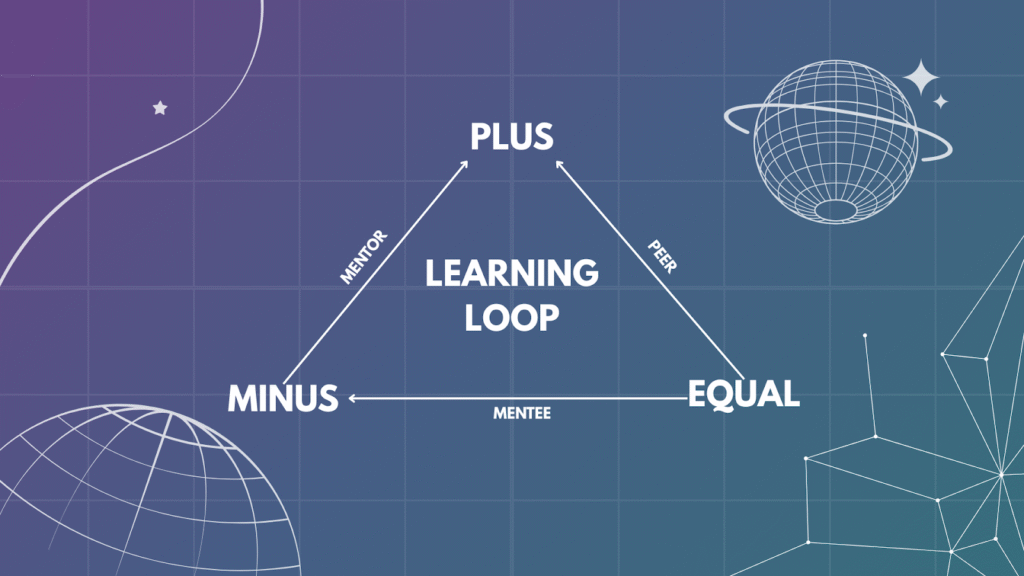
James shares Frank Shamrock’s plus minus equals method:
a. Plus represents the mentor you learn from
b. Minus represents the person (mentee) you teach
c. Equals represents the peers you compete with
Bittensor embodies this structure. Subnet owners teach, miners learn and compete, and participants share discoveries, build tools, write guides, and create podcasts.
Education strengthens the ecosystem and deepens individual skill.
The Path Forward: Bittensor as the Engine of Modern Economic Incentives
The discussion closes with gratitude and excitement.
Both JJ and James recognize Bittensor as the most complete digital representation of capitalism ever built. It mirrors market dynamics, decentralizes competition, and rewards useful work with a precision that traditional systems cannot match.
More importantly, it provides young people and builders with an open path to mastery, income, and contribution.Digital capitalism is not a theory, it is running in real-time. And Bittensor is the platform where its future is being shaped.
Enjoyed this article? Join our newsletter
Get the latest Bittensor & TAO ecosystem news straight to your inbox.
We respect your privacy. Unsubscribe anytime.


Be the first to comment