
Contributor: Crypto Pilote
TL;DR
– The Infra Trap: Big AI is repeating the Xerox and Dotcom mistakes—spending billions on hardware instead of focusing on users.
– The Interface Shift: The Desktop paradigm is dead; Intelligence is the new interface, and agents are the new users.
– The Bittensor OS: Bittensor is the best Intelligence Operating System. It coordinates the world’s infrastructure to serve this new demand, acting as the vital layer between raw compute and human creativity.
– The Great Reversal: After 25 years of centralized data silos, Bittensor uses blockchain to flip the script. It leverages the giants’ own infrastructure to build a decentralized future, ensuring intelligence remains open, competitive, and beyond corporate monopoly.
From Cold Code to Human Vision
When we think about the computing revolution, we usually focus on the surge in chip power, the famous Moore’s Law. But there’s a reality that often goes ignored, one that I find far more fundamental. And it’s about to happen all over again.
What truly brought computers into our daily lives wasn’t just their ability to calculate twice as fast (even if that’s part of it). It was the user experience.
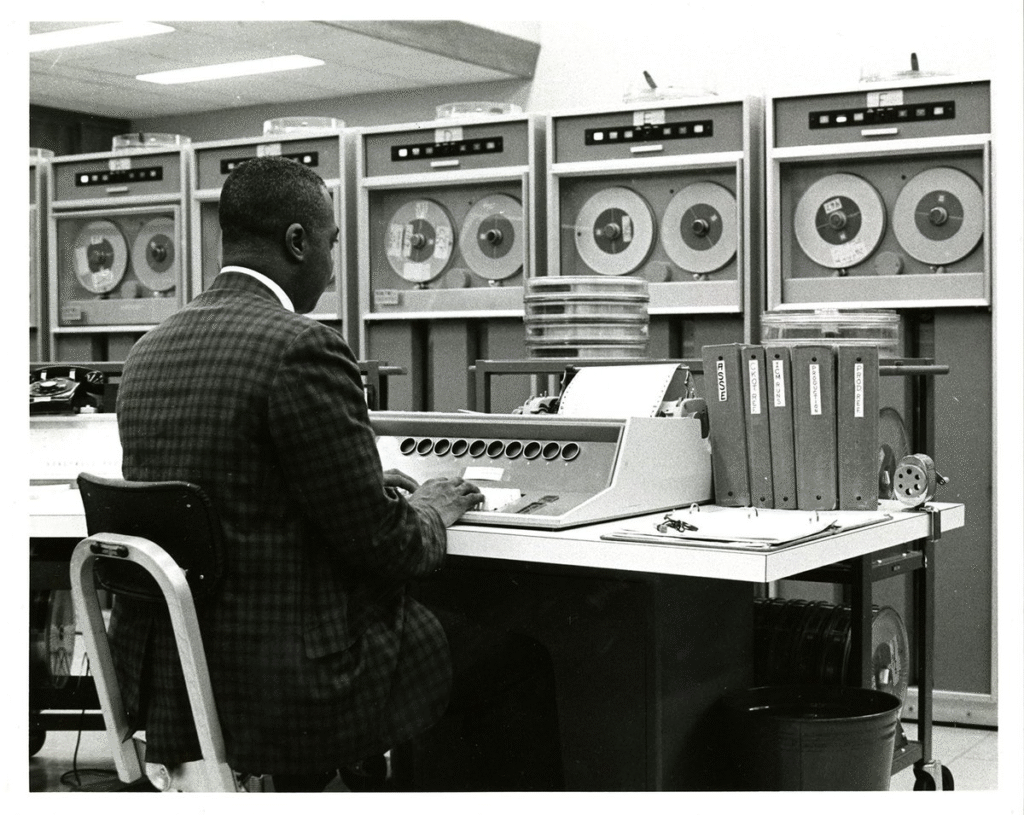
Until 1981, computers were complex and temperamental machines, requiring an extensive knowledge of programming languages. The earliest programs relied on bulky punch cards. Without a visual interface, users had to be experts in their field just to operate the hardware. Communication with the machine was conducted solely through Command Line Interfaces (CLI), using obscure strings of code like PIP A:=B:MYFILE.TXT[V]
For those who struggle to visualize this era, computers were strictly single-tasking, no cursor to move, as every interaction occurred strictly line by line.
From machine to human
The true revolution only emerged in 1981 with the Xerox Star. This personal computer introduced the WIMP concept, which remains the standard to this day: Windows, Icons, Menus, and Pointing devices (the mouse).
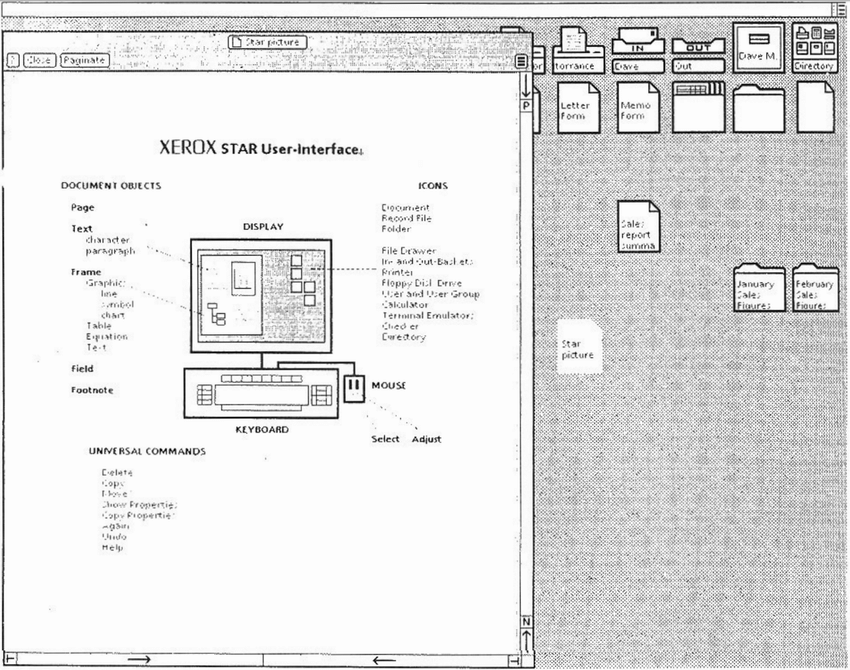
For the first time, user experience was prioritized over infrastructure. The computer finally became accessible to everyone. This was the missing link that allowed users to express their thoughts and creativity through the tool, leading to the use cases we know today.
“A picture is worth a thousand words.”
It is the interface, not the infrastructure, that unlocks the potential of a technology.
Yet, the company that developed the Xerox Star was too narrowly focused on hardware. They shelved the concept, convinced it was useless. Years later, Steve Jobs placed the user back at the center of the equation, refined Xerox’s vision, and met with immediate success. Users over infra.
From human to GAFAM Internet
In the late 90s, the race was on to connect every continent and every user. Every company was chasing the bandwidth bottleneck, and massive infrastructure investments were the priority. This was the ‘Deployment Age.’ Over four years, companies burned roughly $500B in cash to seize market control. At the time, companies were spending up to 150% of their revenue on CapEx and mergers just to become the infrastructure leader.
Supply vastly outpaced demand, and the industry collapsed.
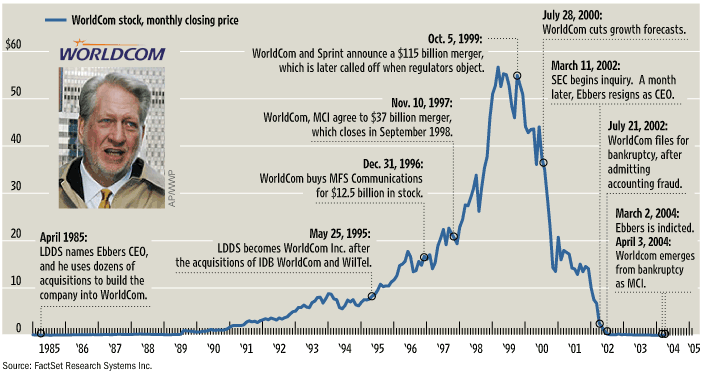
To understand the scale of the crisis, consider these examples. WorldCom aimed to connect the world via fiber. At their peak, 50% of global internet traffic flowed through their cables. They were on the verge of joining the top five most capitalized companies in the world alongside Dell and Microsoft, hailed as the ‘company of the century.’ They ended up falsifying their accounts and imploded in one of the largest frauds in history. Yet, without WorldCom and the other now-defunct companies, we wouldn’t be able to transmit images, video, and audio across the web today.
So, who was the ‘Steve Jobs’ of the Dotcom crash? Google.
They were smart enough to realize that demand must lead infrastructure.
Doing the opposite is like trying to climb a mountain backward: you can’t see the goal (revenue), only how far you can fall (debt).
Instead, they leveraged existing infrastructure to build demand and organic revenue. When the crash hit, they used that capital to acquire the network for 1% of its original cost, cementing their status as leader.
From GAFAM to intelligence
We are repeating the same patterns with AI. OpenAI and Anthropic are spending billions they don’t have on data centers to build AI for the masses, just as WorldCom and Global Crossing once did. Today, revenue is largely driven by API calls, as paid subscriptions represent only 2% of the user base. While many businesses automated their tasks through ChatGPT because of the first-mover advantage, open-source models like DeepSeek or Llama are catching up rapidly. You can already see the cracks appearing with the emergence of specialized tools like Clawdbot.
As with any technology, what once seemed revolutionary is becoming a commodity.
With models like Llama, DeepSeek, or the surprising Kimi, open-source is making AI cheap, and proprietary models are feeling the heat. It is becoming increasingly easy to deploy intelligence locally for a fraction of the cost of ChatGPT API calls. Local models also offer a critical advantage: privacy, a non-negotiable requirement for large enterprises.
The decline begins the moment companies realize they don’t need a centralized engine for the 90% of office work that consists of simple tasks like emails, scheduling, or drafting resumes. If high-performance open-source models continue to improve, the need for centralized models in data centers will vanish. Big AI companies will be left crushed under their own investments, forced to rent out their ‘super-machines’ for trivial tasks. It would be like owning a Formula 1 car, only to be restricted to 30 mph.
This is the precise opportunity Bittensor captures through subnets like @chutes_ai.
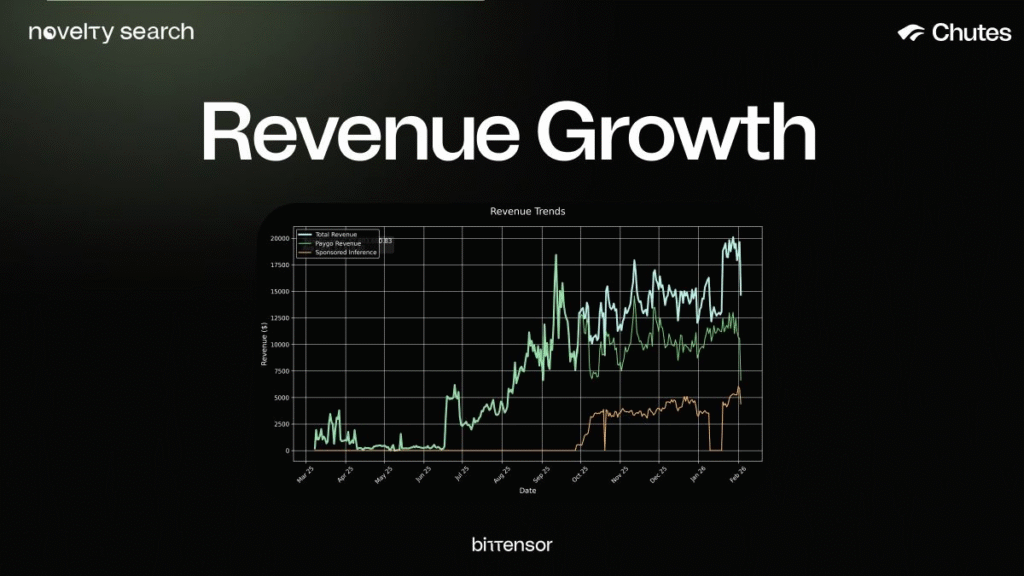
The first shall be the last
As we have seen, the true shift between a technology and its adoption lies in the user experience, creativity and use cases depend on the ability to ‘connect the dots’. This is precisely where Bittensor sits: leveraging existing infrastructure to remain competitive while focusing on applications.
The dTAO mechanism reinforces this behavior by design. If you don’t have customers, you won’t have flow on your subnet. This prevents you from scaling in the wrong direction. You are forced to measure, adapt, and improve your product continuously.
Furthermore, Bittensor’s network dimension makes it incredibly powerful compared to traditional companies. Typically, when a company needs to expand its services, it must rely on third parties, where integration is often hindered by differing languages, workflows, or development cycles. This is not the case on Bittensor. Every subnet operates under the same rules and communicates seamlessly. They benefit from incredible synergies, enabling the development of new verticals or features in a fraction of the time it would take outside the network.
When you act alone, your potential is linear. When you are a network, everyone leverages the expertise of others to grow exponentially.
In just a few clicks, you can access the State of the Art (SOTA) in Compute, Inference, Vision, Prediction, Weather, Markets, Robotics, Medicine, name it! You can mix them and build upon them to push boundaries even further.
What do you call a system where you can seamlessly navigate different tools to empower your creativity? An Operating System.
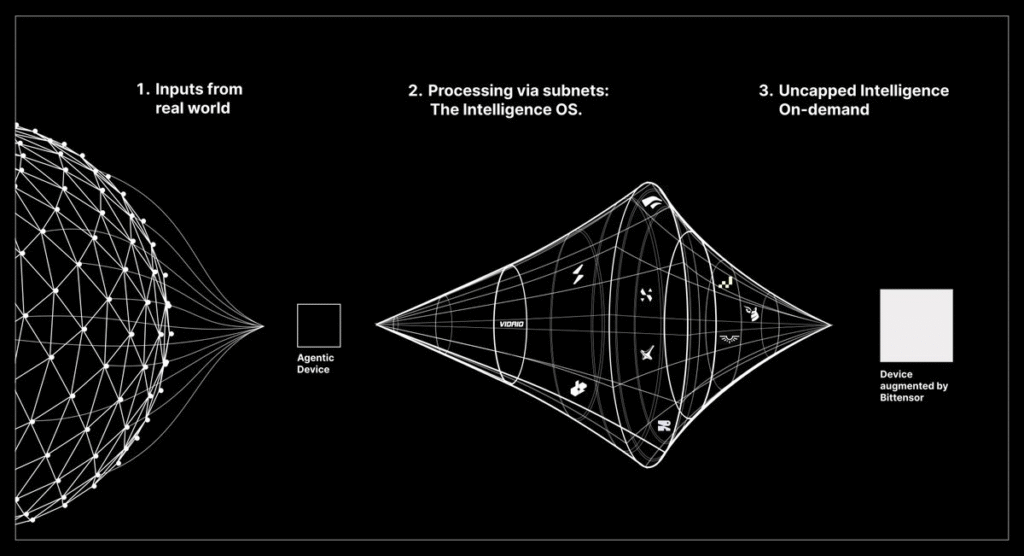
The first Intelligence Operating System.
As is often the case, fundamental change relies on the interface, not just the technology. You may have already noticed: more and more interfaces are becoming simple LLM fields where you simply state your intent.
Think back to when you had to scroll for hours through Google searches or obscure forums. It feels like another age, doesn’t it? This is the same gap experienced by those who transitioned from the CLI to the WIMP era, or from stagnant web pages to the polished products of Big Tech.
As @MaxScore noted in his recent article (https://x.com/MaxScore/status/2022742409751281714?s=20), the internet will never be the same. Soon, everyone will have an agent to navigate the web on their behalf. The internet will no longer be designed for humans, but for AI. Agents have different needs than humans; to optimize their tasks, they require reliable, auditable, affordable, and fast services. This is precisely what Bittensor provides.
We are on the verge of the greatest OS disruption in history. The ‘Desktop’ paradigm is dead. We are about to stop navigating interfaces and start commanding intelligence. Google is already moving in this direction with Project Jarvis, though it remains limited to the Chrome browser.
Why it matters for the world
Data collection is the struggle of the century. During the first 25 years of the internet, we handed the keys over to Big Tech, sacrificing our privacy for free access to new ways of communicating. They already know everything about us. We took that path back then because we had no alternative to organize ourselves trustlessly in a decentralized manner.
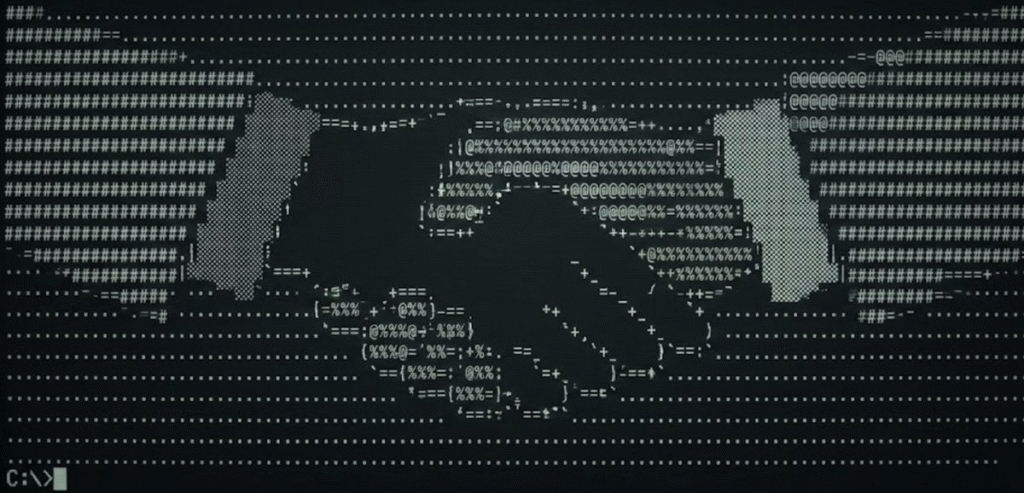
Humanity deserves better. If human intelligence is to be powered by AI, that intelligence must be open, auditable, and competitive to prevent a monopoly. For the first time, we actually have the opportunity to make this happen. We can succeed because we are now acutely aware of the limits of the ‘Big Data’ approach due to ongoing political and social crises. Most importantly, blockchain now exists, providing the perfect foundation to avoid centralization.
Bittensor was built for this mission. Every subnet is an opportunity to unite the most brilliant minds in the world and push the limits of intelligence. You can be part of this revolution by investing directly in the companies that matter to you through Alpha.
Decentralized AI is the Great Reversal of the internet.
Bittensor is the Operating System designed to coordinate it.
Enjoyed this article? Join our newsletter
Get the latest Bittensor & TAO ecosystem news straight to your inbox.
We respect your privacy. Unsubscribe anytime.



Be the first to comment