

Data Universe just demonstrated something interesting about their tool. They analyzed over 65,000 social media posts about Stranger Things Season 5 to show how their platform tracks public sentiment in real time. The analysis covered posts from X and Reddit between December 1, 2025, and January 8, 2026, some days after Netflix released the show’s final season.
This wasn’t just a fun exercise about a popular TV show. It was a demonstration of what Bittensor’s Subnet 13 can do for anyone who needs to track public opinion, whether that’s entertainment companies monitoring reactions, brands checking customer sentiment, or researchers studying social trends.
What They Found About Stranger Things
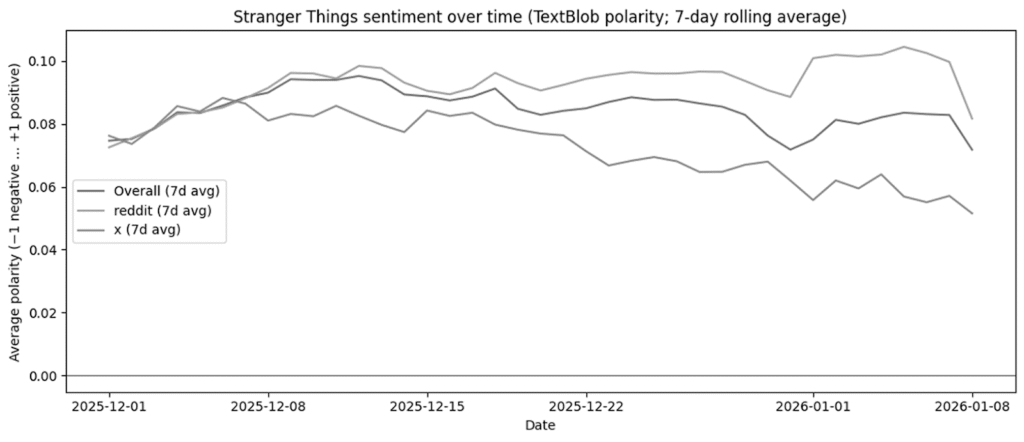
The data tells a clear story about how fans reacted to the final season. Overall sentiment stayed positive with an average score of 0.093 on a scale where anything above zero is positive. But that average hides interesting patterns that emerged over time.
When Volume One dropped in early December with the first four episodes, sentiment jumped. People loved it. Those episodes averaged 8.5 out of 10 on IMDb, and the social media data matched that enthusiasm. Fans were excited, posting positive reactions across platforms.
Then Volume Two came out around Christmas with three more episodes. Sentiment dipped. The episodes averaged 7.2 on IMDb, noticeably lower, and the data showed fans were less enthusiastic. People found these episodes weaker, and that showed up clearly in the sentiment analysis.
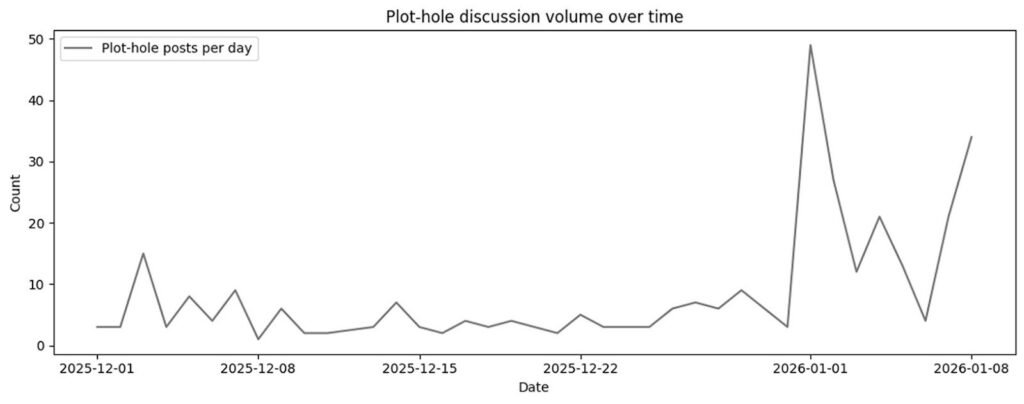
The finale aired January 1, 2026. That day saw the highest volume of posts, but sentiment had dropped even further. The finale scored 7.6 on IMDb, sitting between the highs of Volume One and the lows of Volume Two. Fans were more divided, creating volatility in the sentiment data.
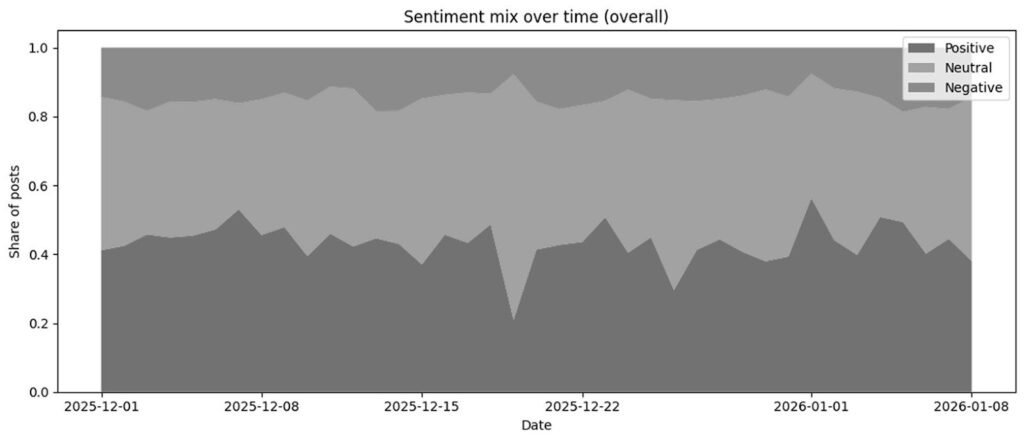
Breaking it down across the whole period, 44% of posts were positive, 43% were neutral, and 13% were negative. Sentiment stayed positive on average but became increasingly mixed as the season progressed.
Specific Insights From the Data
The analysis went deeper than just overall sentiment. It tracked which parts of the show people were talking about and how they felt.
Character Mike Wheeler got the most praise, with 45% of mentions about him being positive. The stage play “The First Shadow,” which ties into the show’s story but isn’t part of the TV episodes, received 64% positive sentiment.
The finale itself got discussed positively in 61% of posts, but about 19% of discussions said it was “ruined” or disappointing. Conversations about plot holes spiked on finale day, with fans pointing out issues with character powers, the Upside Down world-building, and relationship dynamics.
These critical discussions came from what appears to be a vocal minority. While they generated conversation, overall sentiment stayed positive, suggesting most fans enjoyed the season even if they had some complaints.
How This Actually Works
Data Universe operates on Bittensor’s Subnet 13. Miners on the subnet scrape public posts from X and Reddit based on keywords, in this case, anything related to Stranger Things. They collect the posts, timestamps, and basic metadata. Validators verify the quality and freshness of this data, rewarding miners who provide accurate and timely information.
The data gets processed through sentiment analysis using tools like TextBlob, which assigns polarity scores to text. Positive language receives positive scores, while negative language receives negative scores. The system can track this over time, showing how fan reactions evolve.
The platform offers this as a no-code tool anyone can use. You don’t need to write scraping scripts, set up databases, or build analysis tools. You just point the system at a topic, set your date range, and get results. The first five dollars in credits are free to try it.
Why This Demonstration Matters
Companies spend serious money tracking what people say about their products, brands, or content online. Netflix certainly monitors reactions to its shows. Marketing teams track brand mentions. Political campaigns watch public sentiment.
Traditional tools for this cost a lot. Premium platforms charge monthly subscriptions in the hundreds or thousands of dollars. They often cap how many posts you can track or how many queries you can run.
Data Universe demonstrates an alternative approach. Use decentralized miners to collect the data. Run analysis through accessible tools. Pay based on actual usage. The Stranger Things analysis covering 65,000+ posts over six weeks would cost substantially less through Subnet 13 than through centralized social listening platforms.
For smaller teams, researchers, or individual creators who can’t afford enterprise social listening tools, this opens up capabilities that were previously out of reach. Want to track reaction to your indie film? Monitor sentiment about your product launch? See what people think about your podcast? Now it’s affordable.
The Stranger Things Case Study
Using the Stranger Things analysis as a case study makes sense. It’s a topic people understand, with clear data points to validate against. When Data Universe says sentiment dropped around Volume Two, you can check IMDb ratings and see that the episodes scored 7.2 versus 8.5 for Volume One. The data checks out.
This builds credibility for the platform. If they can accurately track sentiment around a TV show and have it match other indicators like IMDb ratings and post volume spikes, the same approach should work for brands, products, or any other topic with public discussion.
The analysis also shows nuance. Overall positive sentiment with pockets of negativity around specific issues. Timing matters, since reactions shift as more content is released. Different platforms show slightly different patterns, with X being more volatile than Reddit in this data.
These are the kinds of insights that matter for anyone trying to understand public opinion. Not just “people liked it” or “people hated it,” but when, why, about what specifically, and on which platforms.
What Makes This Different
Traditional sentiment analysis requires buying expensive tools, hiring data scientists, managing infrastructure, and often paying premium prices to platforms like X for API access. Data Universe removes most of those barriers.
The decentralized model means miners handle scraping, validators handle quality control, and the blockchain coordinates everything. Users just request data and pay based on consumption. No enterprise sales process, no annual contracts, no minimum spends.
This is the same pattern we see across Bittensor subnets. Chutes makes AI compute cheap. Subnet 13 makes data collection cheap. The common thread is removing centralized middlemen who extract profit without adding equivalent value.
The Bigger Picture
This Stranger Things analysis is marketing for Data Universe, obviously. But it’s also proof of concept for how decentralized data collection and analysis can work at scale.
They processed 65,213 posts across multiple platforms over a six-week period. They tracked sentiment trends, identified specific discussion topics, and presented them all in visual dashboards. That’s a working system handling real workloads.
For the Bittensor ecosystem, cases like this validate that subnets can deliver practical value beyond just earning TAO rewards. Data Universe is solving real problems: social listening, sentiment tracking, and trend analysis, which companies currently pay significant money for.
The fact that they’re giving away five dollars in free credits to try it shows confidence the product works. If the data quality was poor or the analysis unreliable, free trials would hurt them. Instead, they’re betting people who try it will see the value and pay for more.

Be the first to comment