

Note: This is an article version of Lucas’s tweet.
We’re now less than two weeks away from the first $TAO halving, but this post isn’t about that.
This is about fundamentals.
Regardless of short-term volatility, Bittensor looks increasingly inevitable because one of the most important chain-level metrics in crypto (revenue) is already strong. Many people simply haven’t looked at the data.
Bittensor Is Producing ~$78K in Daily Revenue
Fact: Bittensor has averaged ~$78,000 in daily revenue over the past six months.
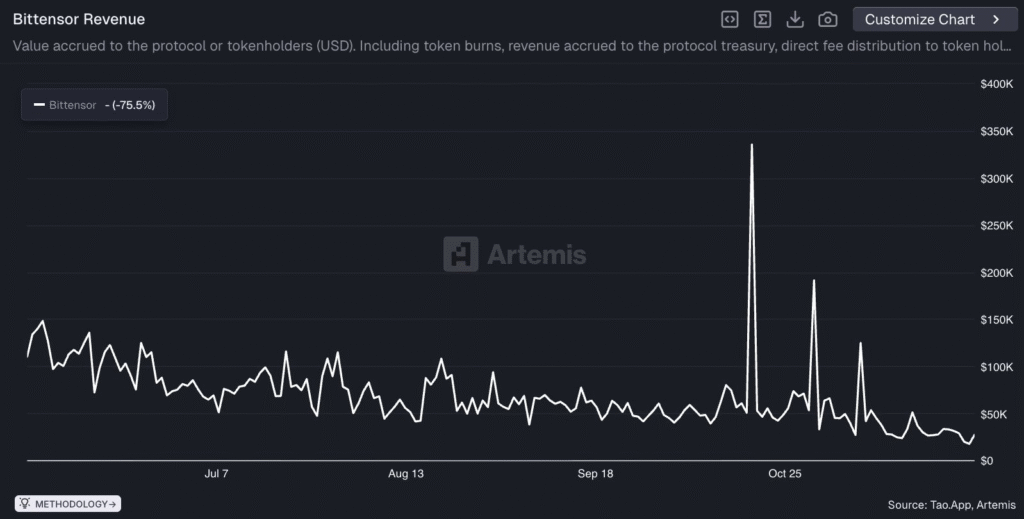
That’s not just impressive, it’s a signal. Especially when you compare its market cap-to-revenue ratio with other chains.
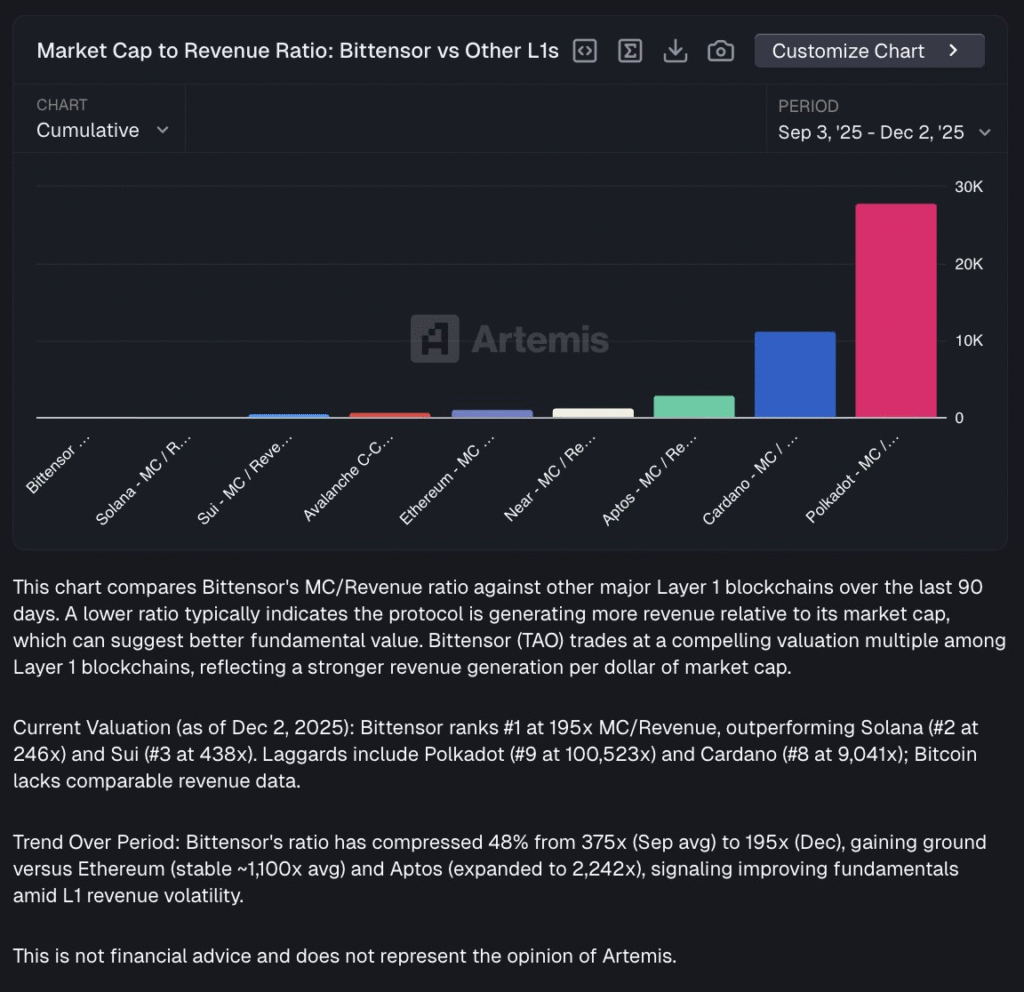
I asked ART Chat:
“Show me Bittensor’s market cap-to-revenue ratio relative to major L1s.”
The comparison was surprising:
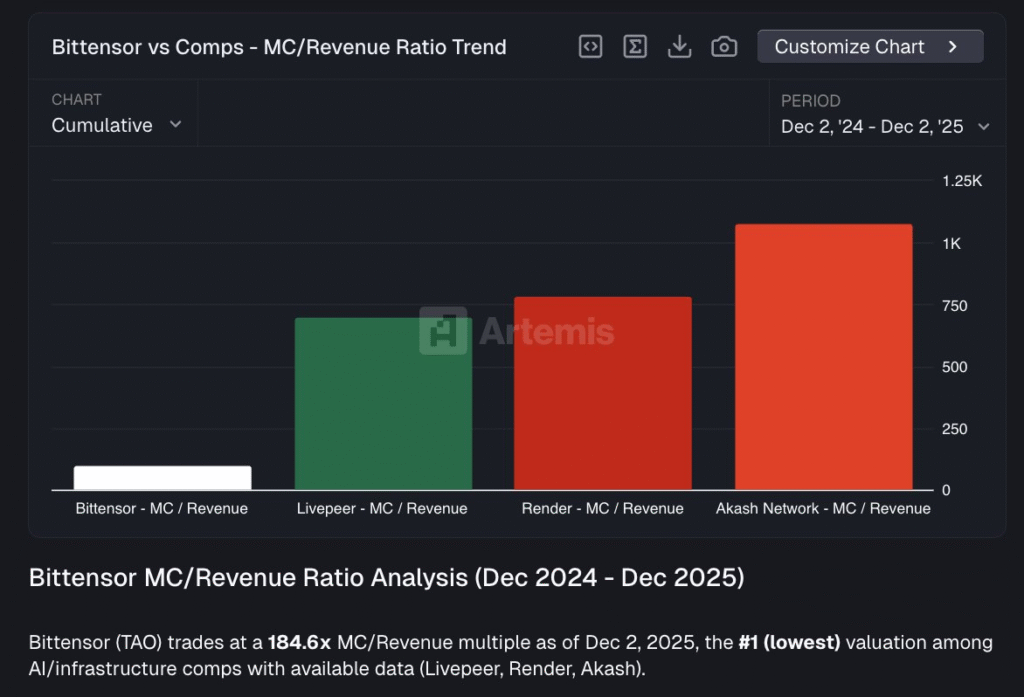
So I asked again: “Okay, what about within the AI / DePIN sector?”, because maybe Bittensor shouldn’t be compared to other L1s.
Why MC/Revenue Matters
For those unfamiliar, the market cap-to-revenue (MC/Rev) metric works a lot like price-to-earnings:
- Lower = undervalued
- Higher = market is pricing in more growth
Right now, Bittensor sits around ~197x.
Verdict: A lower number means the protocol is generating more value relative to what the market is pricing it at. From an investment standpoint, lower is better.
Compare that with:
- Livepeer — ~700x
- Render — ~785x
- Akash — ~1,100x
If Bittensor simply moves part of the way toward these sector valuations, price appreciation would be a natural consequence. That’s what fundamentals suggest.
How Bittensor Revenue Is Calculated
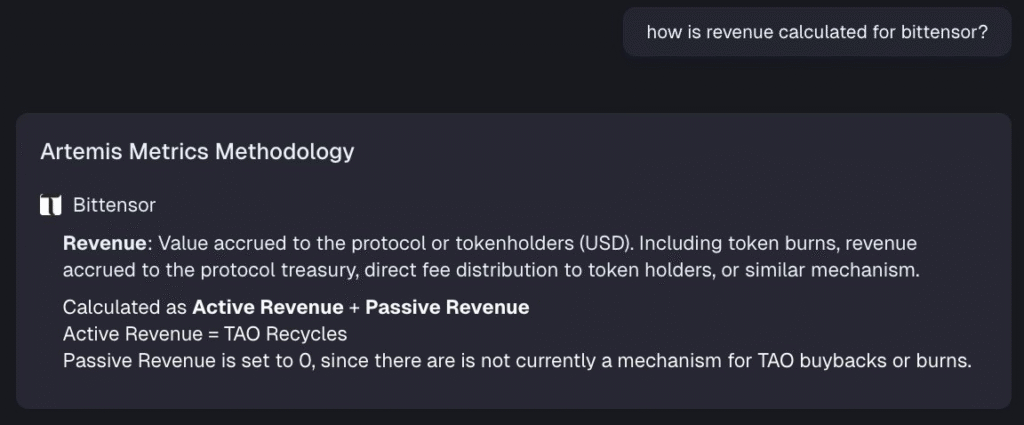
Revenue is computed by analyzing:
- Fees paid across subnets
- Network-level incentives
- TAO burned or recycled back into the economy
- Validator/miner economic flows
- Supply emissions minus sink mechanisms
This gives a far more accurate picture of real economic activity flowing through the network.
Final Take
Even before the halving, the fundamentals look compelling:
- Real revenue
- Low MC/revenue compared to AI peers
- Growing economic activity
- A proven model of decentralized compute incentives
Remember: Short-term volatility is noise. Fundamentals are signal.
Enjoyed this article? Join our newsletter
Get the latest Bittensor & TAO ecosystem news straight to your inbox.
We respect your privacy. Unsubscribe anytime.

Be the first to comment