

Key Takeaways
Bitcoin dropped 1.3% after US inflation data exceeded expectations.
The Federal Reserve may maintain a restrictive policy stance due to rising inflation concerns.
Share this article

Bitcoin fell to a low of $94,081 after US inflation data for January came in above expectations, with the Consumer Price Index rising 3.0% year-over-year versus economists’ forecast of 2.9%.
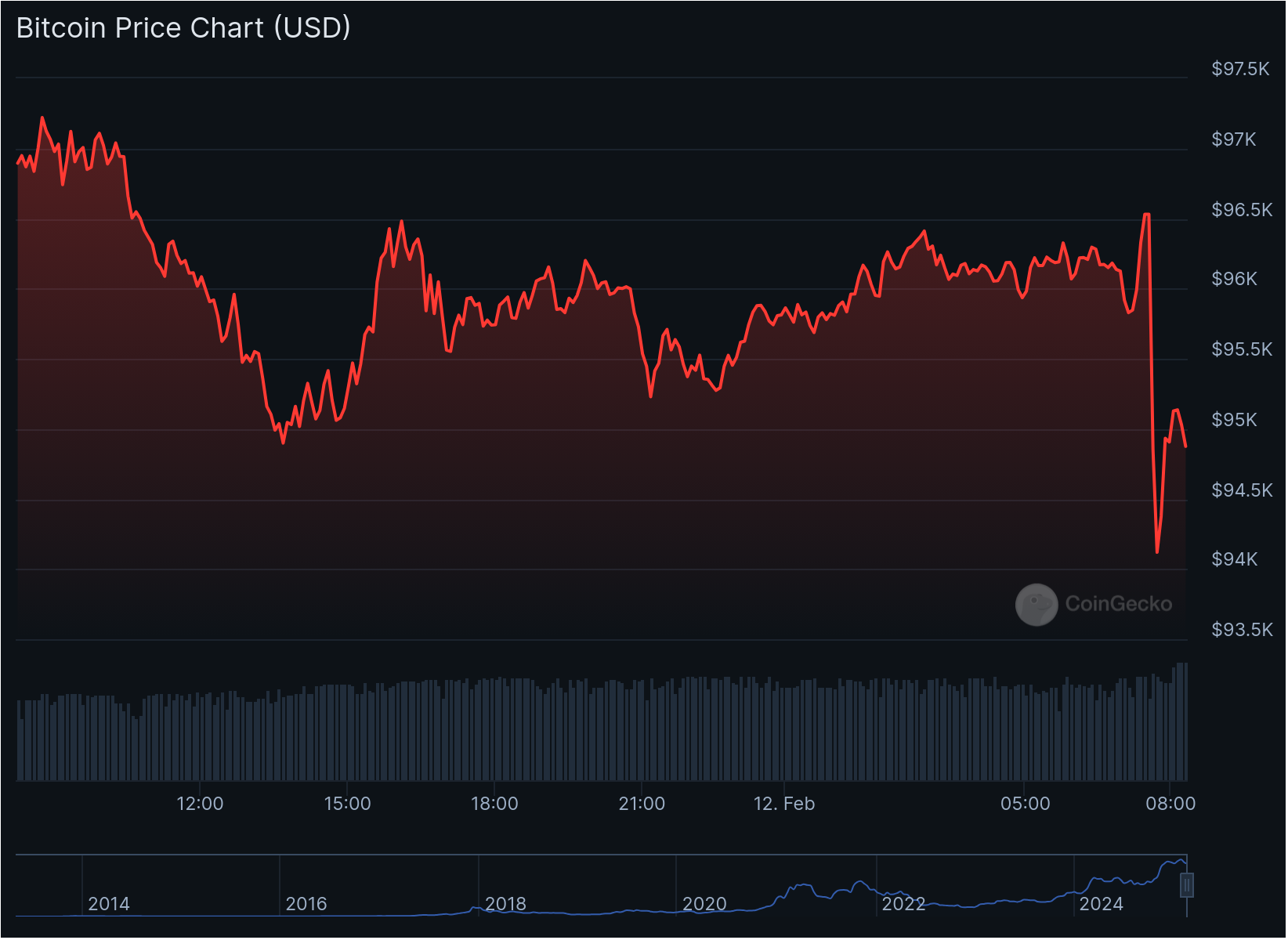
Core inflation, which excludes food and energy prices, increased 3.3%, surpassing the projected 3.1%. The higher-than-anticipated figures sparked selling across crypto markets, with altcoins also declining.
The inflation report follows Federal Reserve Chair Jerome Powell’s testimony to the Senate Banking Committee, where he emphasized a measured approach to monetary policy.
“With our current policy stance being significantly less restrictive than before and the economy staying robust, we do not need to rush our policy adjustments,” Powell said.
Powell maintained there was “no rush” to cut interest rates while reaffirming the Fed’s 2% inflation target.
During the hearing, Senator Elizabeth Warren called for rate cuts at the March meeting, citing concerns about potential economic harm from continued monetary tightening.
The headline CPI reading increased from December’s 2.9%, suggesting the Federal Reserve might maintain its restrictive policy stance longer than previously expected.
Bitcoin, often seen as a hedge against inflation, has struggled to maintain that narrative in recent months.
The crypto market remains highly sensitive to US economic data and Federal Reserve policies.
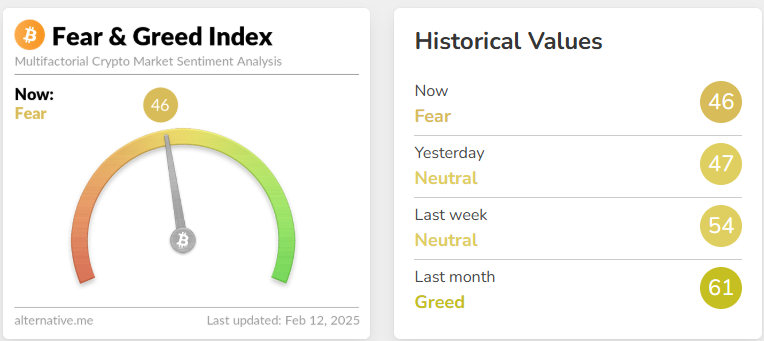
With inflation still running hot, the Fear & Greed Index returned to the “fear” zone today after the recovery seen in recent days.
Share this article
Enjoyed this article? Join our newsletter
Get the latest Bittensor & TAO ecosystem news straight to your inbox.
We respect your privacy. Unsubscribe anytime.
Be the first to comment