

By: TAO Templar
A major milestone may have just occurred in the Bittensor ecosystem. According to a new analysis by creator Travis, Bitcast has become the first subnet capable of fully offsetting its miner emissions through real revenue.
If sustained, the development could mark the emergence of a new economic model inside Bittensor—one where subnets operate profitable flywheels rather than relying purely on alpha emissions.
Below is a breakdown of what happened and why it could matter for the broader network.
A First for Bittensor: Revenue Covers Miner Emissions
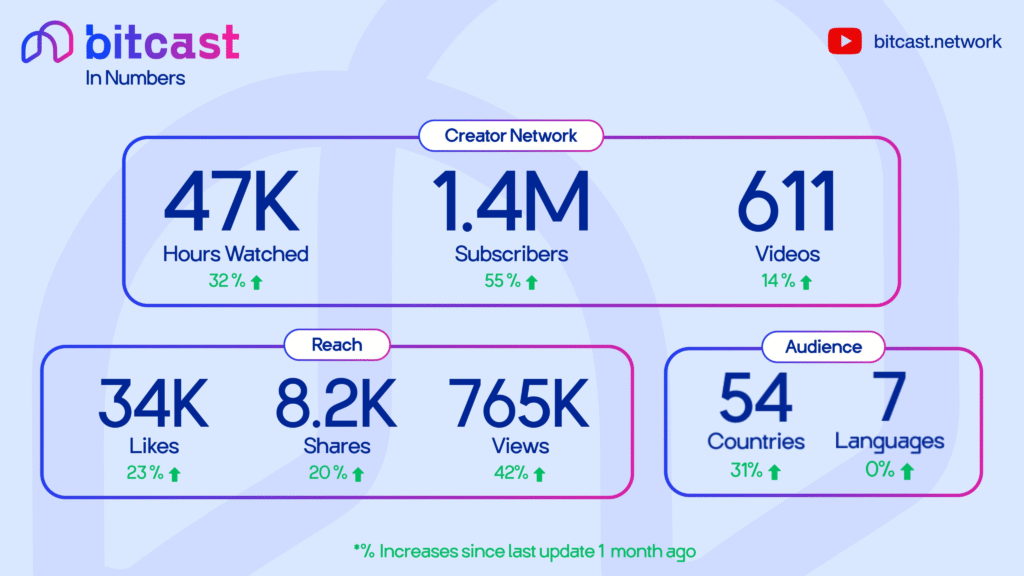
Bitcast (Subnet 93) is a Bittensor subnet designed to reward content creators for producing videos and posts about crypto projects.
Brands pay for promotional campaigns on the platform, known as “briefs.” Creators then produce content that meets the brief requirements and earn rewards based on performance metrics like views or engagement.
The key innovation is how payments are structured.
When a brand sponsors a campaign, the payment is used to buy Bitcast’s subnet token (alpha). Those tokens are then distributed to creators as rewards for their content. In effect, brand spending directly funds miner payouts.
In recent campaigns—including a renewed partnership with Bitget—the total sponsorship budget has fully matched or exceeded the amount distributed to miners.
This means the subnet’s token emissions are effectively neutralized by revenue-driven buybacks.
The Flywheel Model Explained
In most Bittensor subnets, miners receive token emissions that may eventually be sold on the market, creating downward pressure on the token price.
Bitcast’s model changes that dynamic.
Because brands must purchase alpha tokens to fund campaigns, the system introduces organic buy pressure that offsets miner payouts.
The result is what Travis describes as a “flywheel subnet”:
- Brands pay for marketing campaigns.
- Their payments buy subnet tokens.
- Creators produce content and earn rewards.
- Successful campaigns attract more brands.
- More brands generate more revenue and buybacks.
If the cycle continues, the subnet could sustain itself economically without relying solely on token inflation.
Evidence from Recent Campaigns
Recent Bitcast campaigns illustrate how the model works in practice.
For example, an earlier campaign funded by Bitget included a $7,000 promotional budget. Approximately $5,000 of that budget was distributed to creators, with the remainder unused.
A newer campaign has increased the budget to $12,000, reflecting repeat demand from advertisers who saw strong results from the first campaign.
Because that sponsorship money is converted into alpha tokens before being distributed, the buyback effect balances the tokens entering circulation through miner rewards.
Controlling Emissions and Burn Rates
Another notable aspect of Bitcast’s design is its approach to emission control.
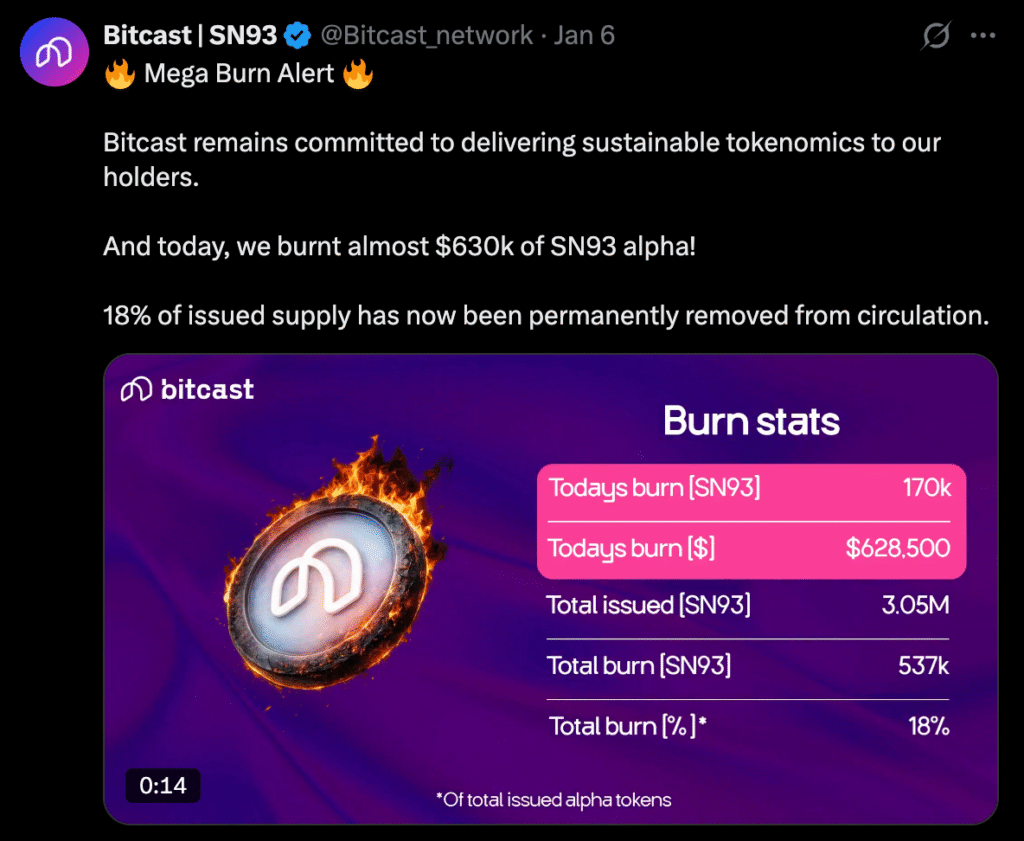
If creators fail to produce enough qualifying content, the subnet simply burns unused emissions rather than distributing them indiscriminately.
Historically, this has resulted in very high burn rates—sometimes 70–95% of emissions—when miner activity was low.
This system ensures that tokens are only distributed when creators produce measurable results.
Additionally, the subnet has conducted periodic manual token burns, further reducing circulating supply.
A Shift Toward Profitability
Bitcast’s operators have also begun tightening payouts to miners by pegging rewards to USD-based campaign budgets.
While that means creators may earn slightly less than in earlier phases of the subnet, the change improves long-term sustainability and profitability.
According to Travis, some campaign formats—particularly sponsored posts on X—now generate profit margins of roughly 30% above miner payouts.
That margin creates additional room for:
- Token buybacks
- Development funding
- Growth initiatives
All while maintaining emission neutrality.
Implications for the Bittensor Ecosystem
The broader significance lies in what this model could mean for the rest of the network.
Bittensor distributes block emissions across many subnets, each competing for stake and attention. If a subnet proves capable of generating real revenue and reducing sell pressure on its tokens, it could attract more capital and network emissions over time.
That, in turn, could:
- Concentrate value in economically productive subnets
- Reduce overall sell pressure on TAO
- Encourage other subnet developers to build revenue-generating products
In other words, Bitcast may have demonstrated a viable path toward sustainable decentralized AI markets.
The Beginning of a New Subnet Race
For now, Bitcast appears to be the first subnet to fully demonstrate this model.
But if the approach proves successful, competition could quickly follow.
Other subnet teams may begin designing their own revenue loops—products or services that bring external capital into the ecosystem and offset emissions.
That shift would represent a major evolution for Bittensor, transforming it from a network primarily driven by token incentives into one powered by real economic activity.
As Travis put it in the video, the moment may represent the first true realization of Bittensor’s long-term vision: crypto-powered flywheels fueled by decentralized global competition.
WATCH THE FULL VIDEO BELOW:



Be the first to comment