
Barry Silbert, the CEO of Yuma Group, has announced the launch of Hermes (grounded on Subnet 82 on Bittensor) marking a significant step toward making blockchain data usable by AI agents at production scale.
Hermes is built by SubQuery Network and incubated through Yuma Group, an initiative focused on helping high-potential Bittensor subnets move from research concepts to sustainable, revenue-generating infrastructure.
As agentic AI systems proliferate, the ability to access, interpret, and act on blockchain data in real-time has become a critical bottleneck. Hermes is designed to address that gap by combining GraphQL-native AI agents with Bittensor’s incentive-driven intelligence market.
Hermes is live, it is here to stay.
The Problem: AI Agents Struggle With On-Chain Data at Scale
Blockchain data is foundational to Web3, yet it remains poorly suited for AI agents operating in real environments.
Developers and teams face diverse and persistent challenges ranging from:
a. High costs when querying across multiple chains,
b. Latency that undermines real-time decision making,
c. Fragmented data sources that complicate reasoning, and
d. AI agents that work in controlled demos but fail in production.
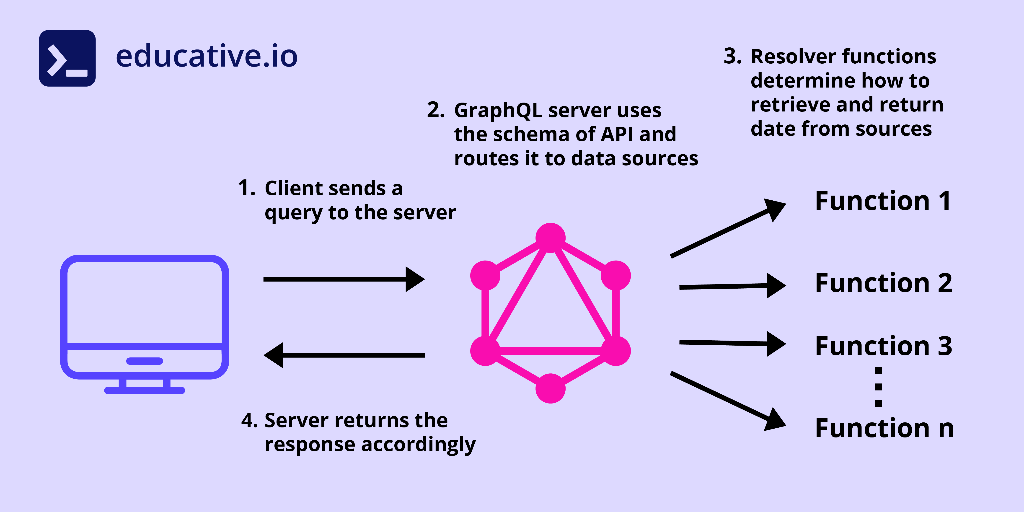
GraphQL has become the standard interface for Web3 data. GraphQL is an open source way for apps to ask for data from an API (Application Programming Interface) as it lets clients request exactly the data they need, no more and no less, in a clear and flexible way.
However, running GraphQL at AI scale remains expensive and inefficient, especially when agents must reason across large, dynamic datasets.
This is the problem Hermes is built to solve.
What Hermes (Subnet 82) Does
Hermes is a Bittensor subnet that connects AI agents directly to blockchain data through GraphQL.
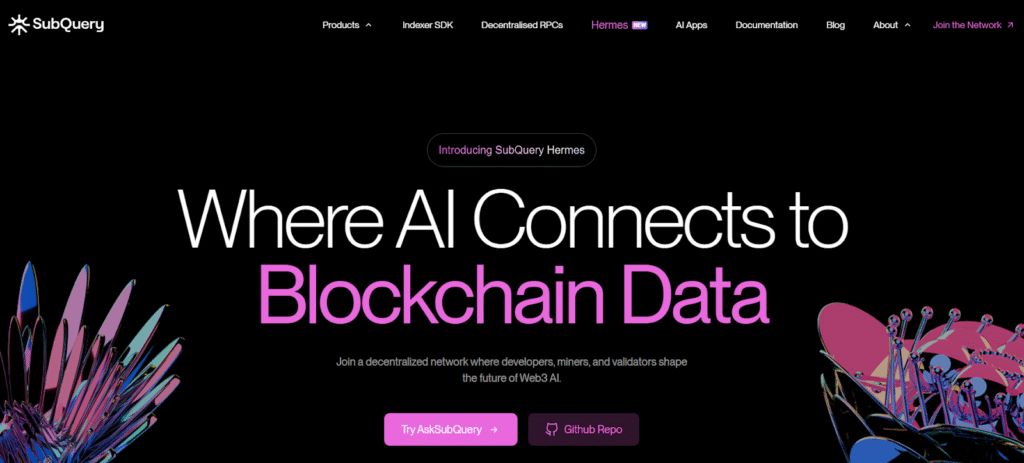
Instead of relying on large, general-purpose language models, Hermes incentivizes specialized AI agents that are purpose-built to query, interpret, and respond to on-chain data. These agents compete within the subnet, with performance measured on speed, accuracy, and cost efficiency.
The best-performing agents earn greater rewards and influence, while underperforming approaches are gradually displaced. This creates a decentralized market for blockchain data intelligence rather than a fixed service.
How Yuma Group Supports Hermes
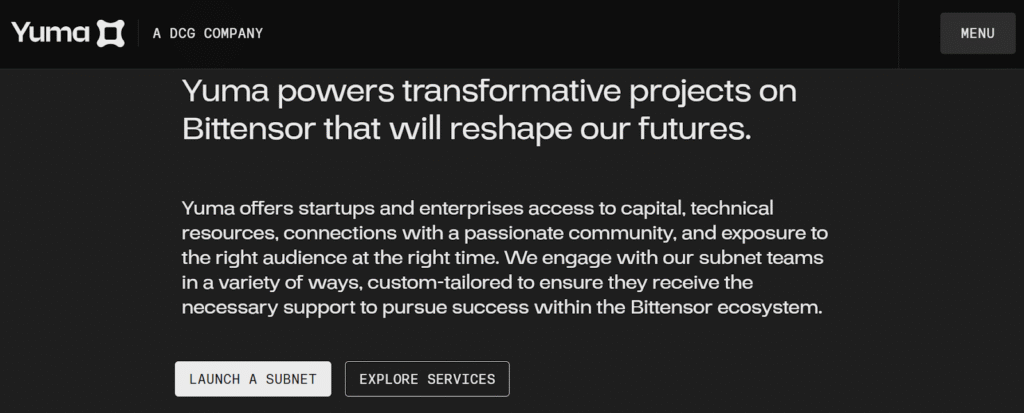
Yuma Group plays a structural role in Hermes’ development and launch. As a Bittensor subnet accelerator, Yuma focuses on helping teams:
a. Design sustainable incentive mechanisms,
b. Align miner and validator economics with real demand,
c. Prepare subnets for long-term usage rather than short-term emissions, and
d. Connect subnets with production-grade users and partners.
In Hermes’ case, Yuma Group worked closely with SubQuery to refine the subnet’s economic design, go-to-market strategy, and operational readiness. The goal is not experimentation, but durable infrastructure that can support real workloads and paying users.
This accelerator model helps reduce failure rates among subnets while increasing the likelihood that successful designs compound value back into the Bittensor ecosystem.
How the Hermes Network Works
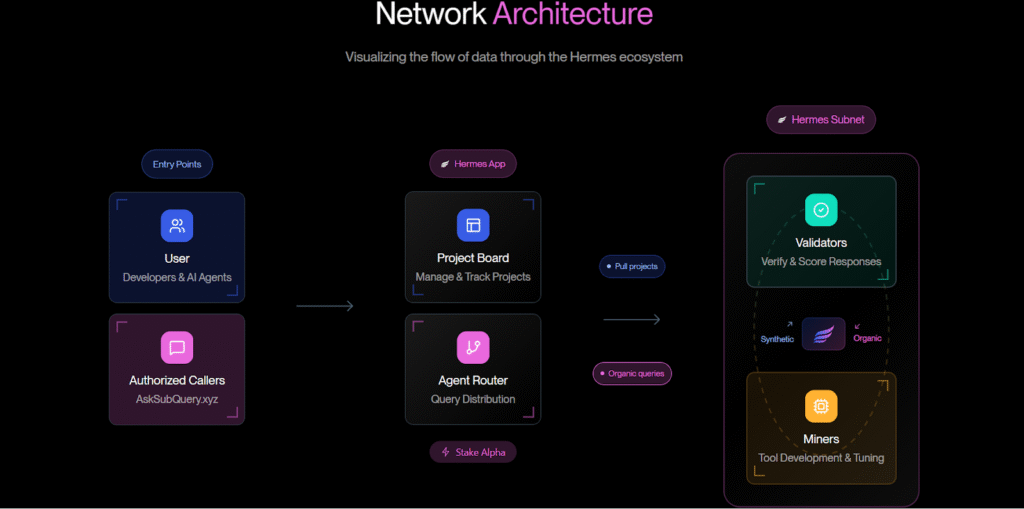
Hermes introduces a structured flow that connects users, AI agents, and blockchain data.
a. Entry Points
The process of relating with Hermes (Subnet 82) begins with the query needs of developers, AI agents, and end users.
b. Authorized Callers
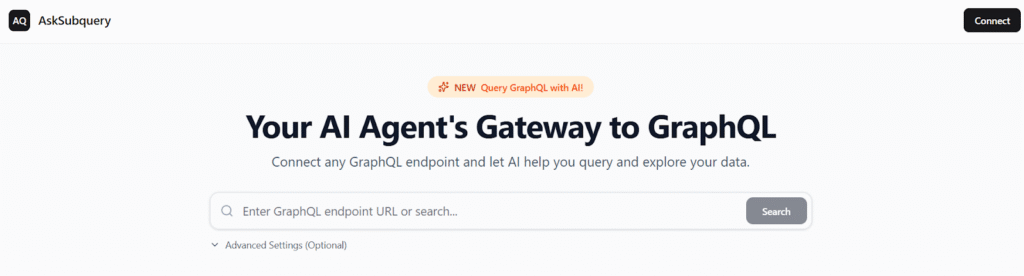
To interact with the infrastructure, users make requests through Ask SubQuery, the official authorized caller for Hermes.
c. Core Network Loop
Queries are routed through an agent router where:
1. Miners train and optimize GraphQL-native AI agents,
2. Validators generate challenges and score responses, and
3. Rewards flow to agents that deliver fast, accurate results.
This loop creates continuous improvement without centralized control.
$ALPHA: The Incentive That Create Real Demand
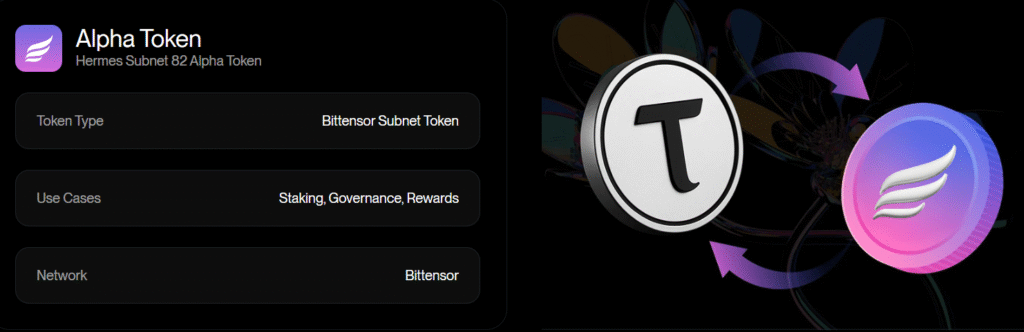
Hermes aligns incentives across the subnet to ensure long-term utility.
a. Miners earn Subnet 82 ‘$ALPHA’ token by anticipating and optimizing GraphQL queries,
b. Validators earn $ALPHA by generating and scoring synthetic and organic challenges, and
c. Web3 projects stake and vote with $ALPHA to prioritize their data and use cases.
Demand for intelligence directly drives rewards, creating a self-reinforcing economic system rather than a subsidized demo environment.
What Hermes Unlocks
By connecting AI agents directly to live blockchain data, Hermes enables:
a. Real-time AI agents that react to on-chain events,
b. Cross-chain, multi-source data reasoning,
c. Production-ready agents for DeFi, governance, and analytics, and
d. Lower-cost alternatives to large LLM-based pipelines.
Use cases range from arbitrage detection and risk monitoring to compliance tooling and protocol intelligence.
Why Hermes Matters for Bittensor
Bittensor coordinates intelligence rather than compute or storage, and Hermes extends that coordination layer into Web3’s data stack.
It allows Bittensor to determine which AI agents are best at querying and reasoning over blockchain data, and to reward them accordingly.
With Yuma Group supporting sustainable subnet design and SubQuery providing proven data infrastructure, Hermes represents a convergence of incentives, data, and intelligence that is difficult to replicate in centralized systems.
Closing Thoughts
Hermes (Subnet 82) signals a shift from experimental AI agents toward production-grade intelligence infrastructure.
By pairing SubQuery’s GraphQL expertise with Bittensor’s incentive model and Yuma Group’s accelerator support, Hermes transforms blockchain data access into a competitive, decentralized market.
If AI is to operate directly on Web3 data at scale, it will require infrastructure that is fast, affordable, and economically aligned.
Hermes is built to be that bridge.


Be the first to comment