
Bittensor is steadily moving beyond raw capability into applied intelligence, where the real question is no longer whether subnets can generate outputs, but whether those outputs can meet the standards of industries that demand precision, consistency, and scale.
Within this shift, 404-GEN (Subnet 17) is taking a decisive step forward with the introduction of Atlas, an enterprise application layer designed to transform decentralized 3D generation into production-ready assets for professional studios.
Rather than positioning itself as just another tooling upgrade, Atlas represents a structural evolution, one that connects open, competitive model development on Bittensor to real-world deployment pipelines used by game developers, designers, and immersive media teams.
A Two-Layer Architecture Built for Scale
This announcement is a clear architectural separation that defines how value is created and delivered:
a. Infrastructure Layer (404-GEN)
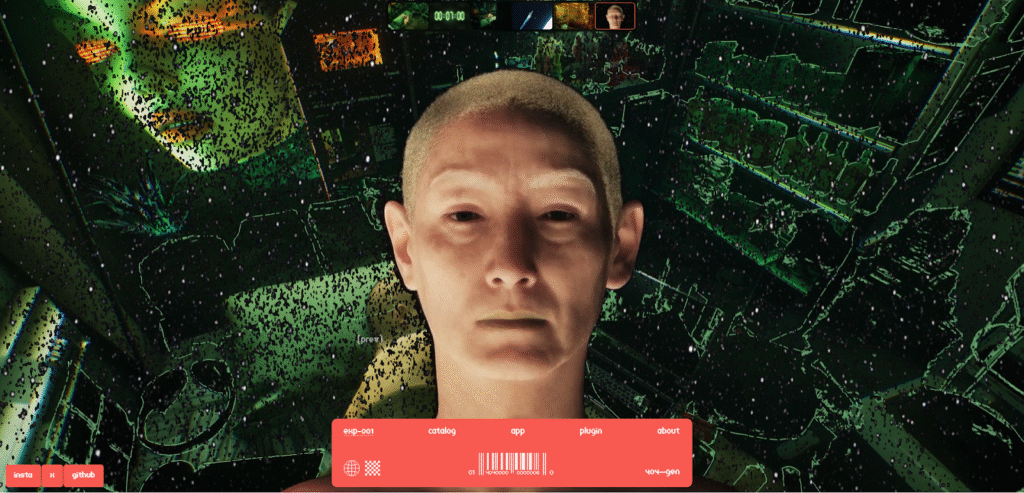
This is where decentralized intelligence is produced, with miners continuously competing to generate high-quality 3D assets through open-source contributions.
b. Application Layer (Atlas)
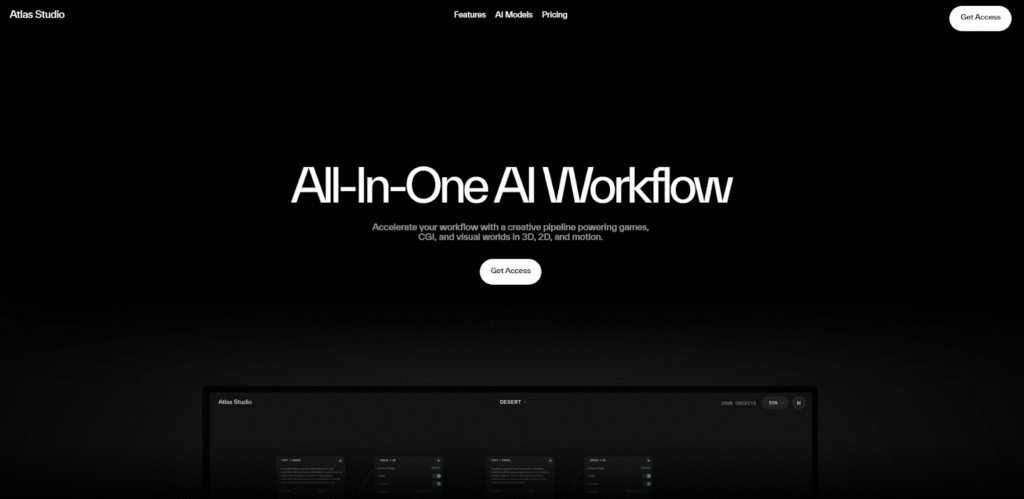
This is where those raw capabilities are transformed into usable, enterprise-grade workflows that integrate directly into production environments.
This separation matters because it allows 404-GEN to remain open and composable at the infrastructure level, while Atlas operates as a commercial interface tailored to enterprise needs.
It also establishes a framework where multiple applications can emerge on top of the same subnet, reinforcing Bittensor’s model as an ecosystem rather than a single product.
Building a Competitive Engine for 3D Intelligence
404-GEN’s approach is grounded in continuous competition, where improvements in quality, speed, and efficiency are driven by incentive design rather than centralized iteration cycles.
The subnet runs structured 3D generation challenges that evolve alongside miner performance, ensuring that progress is both measurable and compounding.
This system operates through several key mechanisms:
a. Open-source submissions, enabling miners to build on each other’s work and accelerate collective progress,
b. Evaluation across quality, speed, and structural integrity, ensuring outputs meet practical standards,
c. Leader-challenger dynamics, where new entrants must outperform existing leaders under identical conditions, and
d. Public logging and transparency, reinforcing accountability and continuous improvement.
The result is a system where model performance does not depend on internal teams scaling research budgets, but on an open market where incentives reward the best outcomes in real time.
Toward Large Spatial Models
The long-term vision behind 404-GEN extends beyond asset generation into what the team describes as Large Spatial Models, a category of AI designed to understand how objects exist and interact within three-dimensional environments. While language models have mastered text, spatial reasoning remains a critical gap for systems that aim to operate in physical or simulated worlds.
Subnet 17 is structured to close that gap by:
a. Enabling the generation of meshes, Gaussian splats, and future procedural representations,
b. Creating iterative competition cycles that push spatial accuracy and realism, and
c. Establishing a compounding innovation loop through shared, open-source development.
This direction positions 404-GEN not just as a tool provider, but as a foundational layer for spatial intelligence within decentralized AI.
From Raw Outputs to Production Pipelines
Enterprise studios require far more than isolated model outputs, as production workflows demand consistency across multiple stages, from asset creation to optimization and integration.
Atlas addresses this gap by orchestrating multi-model workflows that convert raw generations into assets ready for deployment.
Its capabilities include:
a. Texture refinement, ensuring visual quality meets studio standards,
b. Format conversion, adapting outputs for different engines and pipelines,
c. Quality filtering, maintaining consistency across large asset libraries, and
d. Node-based orchestration, combining multiple AI models into unified workflows.
By abstracting this complexity, Atlas allows studios to integrate decentralized 3D generation without restructuring their entire pipeline, effectively bridging the gap between experimentation and production.
Distribution, Adoption, and Developer Access
404-GEN has taken a deliberate approach to accessibility, ensuring that its technology integrates seamlessly into the tools developers already use. This multi-channel distribution strategy has been central to early adoption and real-world validation.
Key integration points include:
a. A Unity plugin, recognized as an official Unity Verified Solution,
b. A Blender add-on, serving as the most widely used open-source entry point,
c. A web application and Discord bot, lowering the barrier to experimentation, and
d. A direct API, enabling custom and enterprise-grade integrations.
This approach has already translated into tangible usage, with consistent downloads from the Unity ecosystem and real-world projects built using 404-GEN assets across gaming, architecture, and immersive media.
Monetization and Alignment
Atlas introduces a clear revenue model without disrupting the underlying incentive structure of the subnet. Pricing is usage-based, allowing customers to pay per generation, asset, or API call, while maintaining transparency around where value is created.
The structure is intentionally aligned:
a. Payments for generation powered by 404-GEN flow directly to the subnet,
b. Atlas operates as a service layer without extracting revenue from core generation, and
c. Incentives remain tied to performance and usage, reinforcing quality at the infrastructure level.
This ensures that as enterprise demand grows, the benefits extend back to the decentralized network rather than being captured solely at the application layer.
Enterprise Validation and Infrastructure Partnerships
Atlas is already demonstrating traction at the enterprise level, with validation from both industry leaders and infrastructure providers. Square Enix has acknowledged its ability to integrate into highly customized production workflows, signaling relevance within top-tier game development environments.
The platform’s partnership with Google Cloud further strengthens its positioning:
a. Built on scalable cloud infrastructure with Vertex AI for orchestration,
b. Accessible through the Google Cloud Marketplace, expanding global access, and
c. Supported by a closed beta program targeting studios and developers.
This combination of technical capability and distribution infrastructure positions Atlas as a credible solution for large-scale adoption.
Expanding Beyond the Bittensor Ecosystem
404-GEN’s visibility has extended well beyond crypto-native circles, with showcases at major global events including GDC, Gamescom, the World Expo in Osaka, and the Venice Architecture Biennale.
This presence reflects growing recognition within mainstream creative industries and reinforces the relevance of decentralized AI in professional environments.
From Infrastructure to Industry Standard
The introduction of Atlas marks a clear transition for 404-GEN from infrastructure provider to ecosystem enabler, where decentralized intelligence is not only generated but also delivered in a form that meets the expectations of enterprise users.
By separating the intelligence layer from the application layer, the team has created a scalable model that supports both open innovation and commercial adoption without compromising either.
As Subnet 17 continues advancing toward Large Spatial Models, the combination of competitive model development, production-ready workflows, and enterprise distribution establishes a strong foundation for long-term relevance.
Within the broader trajectory of Bittensor, Atlas stands as a concrete example of how decentralized systems can move from capability to usability, and from experimentation to sustained, real-world impact.
Enjoyed this article? Join our newsletter
Get the latest Bittensor & TAO ecosystem news straight to your inbox.
We respect your privacy. Unsubscribe anytime.

Be the first to comment